Sometimes we miss the extraordinary in the ordinary. The rather ugly pot that rested on the mantelpieces of previous generations is now a rare antique; the dull old book with a battered cover contains a gem of wisdom; the old hat worn by a great-grandmother that’s kicked about throughout numerous house moves contains a feather from a now long-extinct species of bird.
It’s all too easy to overlook something special when combing texts for the one piece of information that you hope will make a difference to your research. I’ve grown used to reading masses of early texts, some of which reveal a pill-sized piece of useful knowledge (useful from my Galloway nag research perspective, that is), others of which reveal nothing, absolutely nothing, useful at all. I read them just in case.
I dread to think how many millions of words I’ve read over the years, not just relating to Galloways of course, but many of them related to horses. I’m an avid reader. I speed read, and I can get through a book of say 50,000 or 60,000 words in a single day. Then there’s skim-reading, a different process, one in which you skim the book for relevant material without engaging too deeply with theme or content. Between reading, writing, and looking after ponies, there’s not too much time left over in the 24 hours of a day.
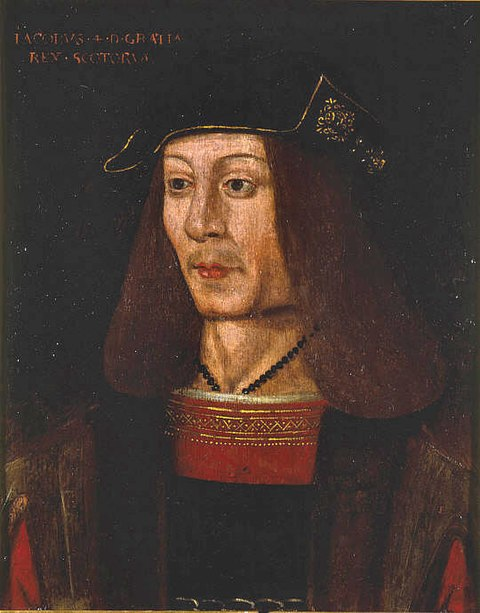
Since references to Galloways are relatively rare (and were much rarer before I started my research, since I’ve unearthed a lot more since then) every single reference counts. I was pretty pleased with myself when I discovered that the sixteenth century Scottish bishop John Leslie (also Lesley) referred to the horses from Scotland, and specifically from Galloway, with enthusiasm. Leslie was the natural son of Gavin Leslie, a rector of Kingussie. Interestingly, when James IV of Scotland had made a major tour of his kingdom, riding 150 miles in a day, it was in the house of an earlier minister of Kingussie that he stayed overnight.
Bishop Leslie’s History of Scotland
John Leslie (1527 – 1596), later the bishop of Ross, was a staunch supporter of Mary Queen of Scots. Indeed, he was one of her most loyal supporters and defenders. In 1569 he wrote A Defence of the Honor of Marie, Queene of Scotland. A Roman Catholic like Mary, his religious career was naturally a tumultuous one, living as he did through Scotland’s Protestant Reformation. He was one of the major contenders in disputation with John Knox in 1561. Yet he was appointed to high offices, including being made one of the senators of the college of justice, and he was appointed with fifteen others as a commissioner to work on the revision of the laws of Scotland. The publication of the resulting Actis and Constitutiounis of the Realme of Scotland in 1566 was largely due to his dedication to the work.
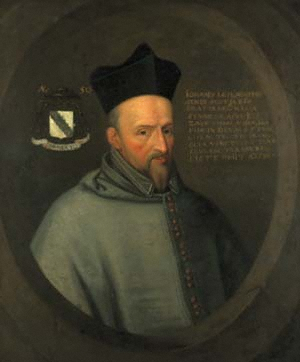
Leslie went directly to Elizabeth I to plead Mary’s cause, but received short shrift. He then became involved in the notorious “plot” to marry Mary to the senior Catholic-sympathising nobleman of the time, the Duke of Norfolk, and was imprisoned in the Tower as a result. Here, Leslie began his project to write a history of Scotland, in the Scots language. It was finally published in 1578 in Latin in Rome, and contains the following gem about the horses from Galloway:
In Galloway ar horsmen, Barounes, and uthiris noble men mony: bot the grettest parte of the cuntrey is dedicate to the Kirk; for it hes by the Bischopes sait, and a collegeyiate kirke called Glencluden, it hes, I say, mony monasteries in quhilkes Glenluse, and the quhyte Case or S. Ninianis ar principall… Quhen our hail cuntrey throuch bringis upe ambling horse, than cheiflie Galloway, that all utheris thay excell, I say,—thay uthiris excell be mony dayes Jornay, thay ar sa swift in body, albeit thay be small. Bot nathir thay mekle gret horse quhilkes being harnest, beiris armed men of weir, ar haldne sa nobil with our cuntrey men, or of sa gret pryce, as horse of midway stature, sa that thay be swifte and of a prettie forme; quhilkes in the grettest battelis hes oft done ws na little skaith.
[In Galloway are many horsemen, Barons, and other noble men, but the greatest part of the region is dedicated to the Church, for having in it the Bishop’s seat, and a collegiate church called Glencluden, it has, I say, many monasteries in which Glenluce and the White House or St Ninian’s are the main ones…When ambling horses are raised throughout our whole country, then [it is] chiefly in Galloway, [where] they excel all others, I say, – they excel all others by many day’s journey, they are so swift in body, although they are small. But the large great horse, harnessed up to bear men of war, is neither held to be as noble with our countrymen, nor of such great price, as horses of medium stature as long as they are fast and have a handsome form; which in the greatest battles has often done us no little harm. Trs. Miriam A Bibby]
Obviously in my search for Galloway information, I was thrilled to come across this endorsement in Leslie’s work, as well as references to the superbness of the Scottish court in the days of James IV. Leslie wrote that the Scottish lords and ladies all outshone the English who accompanied Princess Margaret, sister of Henry VIII, when she arrived in Scotland to marry James. He made particular references to the high quality of their dress, their jewels, and their “massy gold chains”, and also to the high quality of their horses. Well, I guess as a Scotsman he may have been a little bit biased. However, the Scots clearly loved fast, beautiful horses, and they loved to race them as well, so much so that a court poet of the period satirised them for betting too much on the races.
It was from Leslie that I also learned of James IV’s great horse ride to visit the far-flung parts of his kingdom. So, rather gloating over this wonderful information, I set it forth in my Galloway book. But I missed something really wonderful in Leslie’s work, the best information of all about the Galloway. And now I can share it with you.
Here’s the bit I missed first time round!
Going back to Leslie’s work in search of something entirely different, I came across the following:
For intertynement of freindship, the King of England send ane gentill man with horssis to the King and Quene, and sum of thame barde steille, for the Kings use, quhilk wer presentit the first day of October, and the messinger weille rewardit be the King, returnit into Ingland. And shortlie thaireftir, the King of Scotland send againe certane propper Scottis horssis, principallie of Galloway, with a greit number of guid Scottis halkeis to the King of Ingland ; so that be sic mutuall taikinnis and propoynes, the love and hartly kindnes mainetened and nourished betuix those tua princis, as betuix the fader and the sonne.
[For the entertainment of friendship, the King of England sent a gentleman with horses to the King and Queen [of Scots] and some of them with barding of steel for the king’s use, which were presented the first day of October, and the messenger, well rewarded by the king, returned to England. And shortly after, the King of Scotland sent again certain proper [true, genuine] Scottish horses, principally [those] of Galloway, with a great number of good Scottish hawks to the King of England; so that by mutual tokens and gifts, the love and hearty kindness [were] maintained and nourished between those two princes as between the father and the son. Trs. Miriam A Bibby]
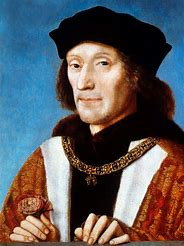
In other words, King Henry VII of England sent some horses as a gift to James IV in 1503, round about the time of the final negotiations relating to his daughter Margaret marrying the King of Scots. In return, James IV sent him “certain proper Scottish horses, principally those of Galloway”.
Big airpunching going on here!
Why is this so important? It matters because it shows that horses from Galloway were seen as a “proper” elite gift at the highest level – from king directly to king. The exchanging of horses had been an important part of international royal relations since at least the days of the pharaohs. Previously the most significant evidence that I’d had to argue the case for Galloways as elite gifts was the proposed gifting of one from the Archbishop of St Andrews to the Archbishop of Canterbury. Here was the final proof I needed to show the importance of Galloways as kingly gifts.
What’s more, this opens up far greater potential to argue the case for Galloways being exchanged beyond the island of Britain. I’m sure this occurred; it’s simply that they are not identified by that name in the correspondence. Both Bishop Leslie, and of course Mary Queen of Scots herself, had connections at the highest level in Europe. At this stage in Galloway history, it was perhaps the Catholic equine and equestrian networks that mattered most, and we know that soon after Henry VIII coming to the throne he would be in correspondence with the Gonzaga family of Italy about the cavalli corridori di Scotia (the running horses of Scotland) and exchanging horses from Britain with those of the Gonzaga razza, or breed.
Interestingly, later on the Galloways would become associated with the Presbyterian and Covenanting Scots rather than Catholics. One of the interesting things about the Galloway is how it shapeshifts through time, particularly from an English perspective.
Later still, the Galloway name would be carried forward by working people, the pack horse men and women, miners, and upland hill farmers. Their use of the term matters just as much to me as the fact that Galloways were important enough to be exchanged as gifts between the kings of Scotland and England in late medieval and early modern times.
Much more remains to be explored, and watch this space!
Miriam A Bibby March 2025
 historyonhorseback