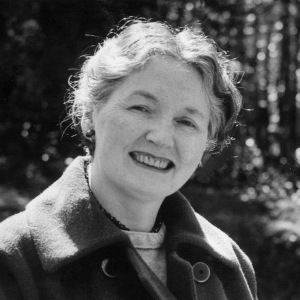
By Miriam A Bibby
[Note: this is a piece I wrote some time ago for an anthology that did not materialise. The concept was pony and horse themed books that had influenced the contributors. I publish it here in appreciation of the life and work of Gillian Baxter, who sadly died in March 2025. The piece contains some direct lines from the book and my own descriptions of the lasting impression left on me after I read it, such as the opening paragraph.]
In the streets of a grimy industrial town, a thin red-haired girl rides out in the rain with a string of riders on dead-beat ponies. A palomino dances in a decayed theatre, a terrified girl clinging to its back, while the audience of teenage Teddy-boys jeers. The shattered face of a bitter dark-haired woman stares straight ahead over the heads of a pair of bay carriage horses. Her eyes are those of a traveller’s horse, one hazel, one blue. A Hungarian cavalry officer, alien and redundant in a world that will throw away its heritage, tries to create a sense of belonging through the salvation of an unwanted horse…
I can’t remember when I first read The Stables at Hampton by Gillian Baxter. Lost within the feast of books that I was devouring, so many of them with illustrations of horses, ponies and baggy-jodhpured children on the jacket, neither the title, nor the cover illustration by well-known artist of the genre, Anne Gordon, seemed particularly memorable. It was only years later that I really noticed the figure of Tamara, she of the scarred face, her back firmly turned away from the reader, standing upright and elegant in red coat-tails and close-fitting trousers as she converses with Andras the officer. He wears tweeds, full jodhpurs and riding boots. Decades later, now with a head full of acquired terms such as “cultural assimilation” and “cultural appropriation” to assist me in “unpacking” the image, I see the subtlety of it. Tamara, appropriating the masculine dress and skills of the Spanish Riding School of Vienna, the bold red of her coat not quite standing out against the brown horse on which Andras sits; Andras, more chameleon-like, assimilating the misty landscape tweeds of the British country sportsman.
Tweed; and cavalry twill. The word “tweed” originated in southern Scotland, a variant of “tweel”, or twill, cloth, plus a possible conflation with the river named Tweed. And that term, twill or tweel, probably comes from the Old High German/Old English zwilih/twilic, “to weave with a double thread”, creating a diagonal line. Then, jodhpurs of course; that staple of 20th century British pony books, acquired along with gymkhanas and polo during the days of empire.
In my mind’s eye I see the protagonist of the book, Ginny Harris, and the palomino Golden Gambler heaving themselves out of filthy fast-flowing flood water onto the bank. A sinister old couplet about the rivers Tweed and Till rises unbidden: “Says Tweed to Till: ‘What gars ye rin sae still?’ Says Till to Tweed: ‘Though ye rin with speed. And I rin slaw, For ae man that ye droon, I droon twa’.”
All this is running in my head now as I look at that image with new eyes. Not exactly fresh eyes, nor clearer ones, but new ones. Returning to a book after many years can be revelatory. What did I think the first time I looked at it?
Stables. It was “The Stables at Hampton”. Hampton sounds posh, distant, southern, and I’m a northerner, so it’s the stables that matter. As I become absorbed in the cover, I walk into familiar territory, that of the stable, conjuring up the smells, the sounds, the activity, the colour, life itself. Everyone in the image ignores me. Tamara, Andras, a rider on a black horse, also with her back to me, adjusting her stirrups; the girl with the plaited hair on the bay, riding off the spine of the book.
Stables. Anyone who aspired to keeping horses then knew that stables were the heart of horse-keeping. I invented a game, which I know I shared with many. Let’s call it “Fantasy Stables”. The creation not only of imaginary stables, but of all the horses that would live in them. The greys, the bays, the blacks, the coloureds (skewbalds and piebalds, paints in the US), the duns, the palominos, the cunning ponies, the flamboyant Arabians, the dramatic Spanish horses pawing the air. The wild horse caught on the range that became as close as a lover, faithful and telepathic. In my mind, all the horses I knew from books and from TV westerns lived together in the vastness of the memory system I had created intuitively from my desire for the imagined horse. Later, in National Velvet, I came across Velvet Brown’s imagined stables, the ones in dreams that were “blowing about her bed” as she slept:
“Sometimes she walked down an endless cool alley in summer by the side of the gutter in the old red-brick floor. On her left and right were open stalls made of dark wood and the buttocks of the bay horses shone like mahogany all the way down. The horses turned their heads to look at her as she walked. They had black manes hanging like silk as the thick necks turned.”
I didn’t anticipate the way the opening paragraphs of The Stables at Hampton would take my breath away. Instead of the orderly well-to-do world of the stables, the one with which I was so familiar through the work of the Pullein-Thompsons, Pat Smythe and many others, it described my world. The gritty urban world of working horses in the rain, “narrow sooty streets…long streets of terraced houses…the whistle and rattle of shunting…the wet-ash train smell.”
It described a family that I recognised: a family that lived, along with other similar families, in “soot-caked red brick…houses” with “minute patches of cat-haunted grass which were called gardens”. At that time my family occupied the upstairs flat of a two-storey Victorian terraced house in Newcastle-upon-Tyne, a five-room flat with mouldy sash windows and walls that smelt of some strange unknown rotten-egg damp. We had no bathroom, but – reflective of the refinement of poverty – we had a bath hidden behind a wooden partition in the scullery. In this we were better off than most others in the street who had either a bath beneath the kitchen sink or no bath at all. Our toilet was outside in a building in the yard, a concrete area approximately 12 feet square, accessible via a terrifyingly steep flight of stone steps. There was no electric light down there.
More than that, I recognised in Ginny’s family the overwhelming sense of exhaustion through impoverishment, the weariness that comes from always “just getting by”, of ambition and hopes fading and disappearing, of arguments in a cramped and depressing environment with no hope of transcendence; the family dynamics that create placatory and avoidance strategies.
A girl riding out in the urban rain with a string of bedraggled ponies in front of her. The dancing palomino, slipping on the boards as fear rises in his rider and the crowd mocks. A woman with a scarred face dressed as a cavalier, doing a fall and a drag stunt from horseback for a film company. A man escaping as the last barricades of the Hungarian uprising fall, leaving most of his friends dead behind him…
The courage of Ginny Harris in saving the palomino Golden Gambler plucks her from the world of terraces, midland breweries, small-time spivs (crooks) and neglected, run-down riding school ponies to work for the charismatic Tamara Blake, owner of Hampton Stables in Sussex. If the sudden change in her fortune seems a little unlikely to the adult reader, it did not seem so to a child hungry for just such a change in circumstances. Ginny, a polio survivor (most children in 1960s Britain would have seen other children wearing calipers as they recovered from the disease), has one leg that is “long and hard, with no spare ounce of fat – merely bone and muscle – the other was skeleton thin, the muscles shrunken and wasted, the tendons standing out like taut strings in the ankle and under the knee.”
Thin tendons like taut strings: like the “little hands like piano wires”, of Velvet Brown as described by Mi Taylor. Taut fragility hiding reserves of strength is common to both Ginny and Velvet, and both are the saviour of a horse: in Velvet’s case, The Piebald, with which she wins the Grand National; in Ginny’s case, Flash, the ex-racehorse that she restores to health and literally “takes”, in order to protect him from his former owner’s abuse.
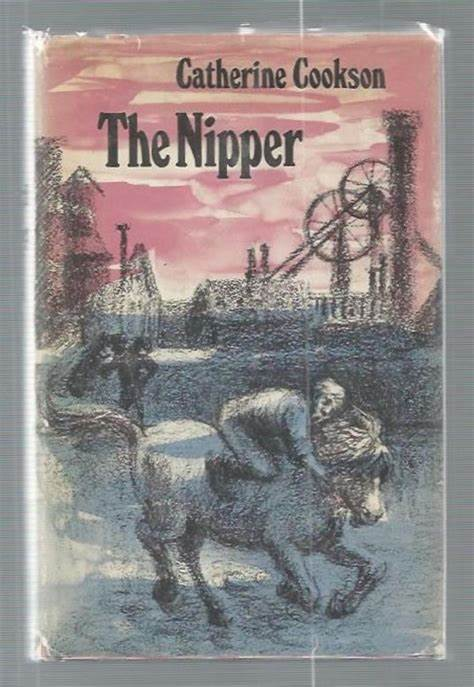
In my early years, my horse and pony horizon was bounded by horses on television and in books, ponies and donkeys on trips to the seaside, pit ponies when we went to visit my uncle who was a coal miner, and the working horses that were still highly visible on the streets of the city. Our coal was delivered by horse and cart. I always used to give some sugar to the cob, who had his ears laid back in a permanent grumble but was in fact friendly enough and very knowledgeable of his round. Cassius, he had been named, not a classical allusion, but for the rising star of boxing whom the world would come to know as Muhammed Ali. Years later, I saw a photograph of Ali with his daughters on horseback and thought how wonderful it was that when he achieved success, that was one of the things he made possible for them.
My own father was equally supportive of my interest in horses, but my mother was not. It was a source of tension between us throughout my life. I remember the first time my father took me to a riding stable. I was about five or six years old and I recall bouncing all over as the little dark grey pony trotted across Newcastle’s Town Moor, led by a handler. At one point I leaned forward, spoke to the pony and stroked his neck and he turned his head to look at me.
“He’s listening,” I thought exultantly. “He’s listening to me! He understands me.”
It was a revelatory moment. Being the youngest in the family most people did not really listen to me. They indulged me, made fun of me, teased me, scolded me – they did not take me seriously though, apart from my father who understood the depth of my passion. He had been a frail child whose mother had not let him go out to play in the woods and fields around his home in the village of Burnopfield in the Tyne Valley. He was determined that his children should have the opportunity to enjoy outdoor life and sports.
Not long after my first real experience of horse riding, his small business was made bankrupt and we went to live in what I have ever afterwards called the “slum flat”.
A girl riding out in the rain in a town that smells of breweries. Stables with corrugated metal roofs from which the rain drips onto the backs of the weary ponies. A palomino falling to his knees in a final bow between shabby curtains. The dark-haired woman dressed as a cavalier, dragged by an out of control horse that starts to kick, kick, kick. A lonely man in the complexities of exile.
“One day, vowed Ginny, one day I’ll get away from this town and learn to ride properly.”
I added another secret to my dreams, this one never to be told. At the age of five, unaware of issues of class and money, I had happily told everyone that I wanted to be a showjumper when I grew up. Looks passed between adults but nothing was said. Or a cowgirl, I continued. Clearly these were actual jobs that people could do – some were nurses, some miners, some teachers. Others were showjumpers and cowgirls.
Now I added the great secret – nothing, but nothing, could compare with the bravery and skill of a stunt rider dressed as a cavalier taking part in a controlled fall and drag. Nothing. I was wise enough not to tell anyone of this ambition.
We were not always stuck in the slum flat. Northumberland was still a wild and remote county at that time and I remember dunes and tussocky grass, pale blue skies, the bitterly cold easterly from the North Sea and Bamburgh Castle on the horizon. I remember the donkeys at Tynemouth with brightly coloured bridles with their names on gleaming brass plates. I remember freedom and the sound of the sea, the Roman Wall, castles, the white cattle of Chillingham. And I remember – I can never forget, nor can I ever repay it – my father paying, from his wages of £14.00 a week, half a crown, and later fifty pence, so that I could go riding every Saturday. Eventually, my father found a better job in County Durham and we moved away from Newcastle and into a brand-new council house.
I assumed that everyone knew that my ambition was to work with horses. At that point, the career path was through the British Horse Society and by the age of 11, I had known exactly what was required. The three BHS Stages; followed by a teaching qualification and work as an assistant instructor. Finally, after years of work, qualifying as a full BHS Instructor. I read voraciously and knew exactly where I was going. I was going to teach people to ride horses. I thought my mother would be pleased – she had wanted her children to fulfil her ambition to be a teacher. She had been thwarted of this opportunity when her jack-the-lad father, a shell-shocked victim of WWI, prevented her from taking up the art scholarship that she had won, telling her that she would “gan oot and get a job.”
At the age of 13, I was “sat down” in the living room and “asked the question” about my future.
“What do you want to do when you leave school?”
“Well, I want to work with horses – ” I had been about to explain about the BHS stages but I got no further.
“YOU” (this was my mother speaking) “are NOT working with horses.”
Taken aback, mouth open, I turned to my father for help. My mother’s head swung round towards him.
“Alan,” she snapped, “tell her she is NOT working with horses!”
My father looked unhappy. “You’d better do what your mam says,” he said.
“YOU,” continued my mother, “can be an English teacher or a librarian, seeing as you like books so much.”
She snorted sarcastically over the word “books” as if it was a category A drug. Contemplating the thousands I now possess, perhaps they are.
My mother lit up one of the dozens of cigarettes she smoked each day. Discussion over.
Deprived of the opportunity to have any horses or ponies in my life in my later teens, I put aside the memories of the books I had read and the dreams I had created. Inspirational left-wing teachers in a modern comprehensive school in one of the most socialist counties in the socialist Britain of 1960s and 70s encouraged any academically inclined students to take advantage of the grants and university places that were then available. In their brave new world, they would have found it derisory if I, or anyone else, had expressed a desire to work with horses.
My rebellion was to choose something equally as improbable for a working-class girl. History and archaeology were my other passions – archaeology was my chosen path.
More maternal recriminations followed. What would I ever do with so useless a subject?
Make a lifelong, postponed teenage rebellion of it, I realise now, as I sit on a hill in south west Scotland with my ponies, or wander with them at liberty through the forest, or think and write about the contribution of the horse to our history. Make one, great, lifelong, glorious, infuriating teenage rebellion of it.
I bought my first pony when I was 26. Further criticism from my mother. My father had been dead for seven years then. I have never been without the companionship of horses since. Yes, I have stables, too; they are functional shelters for the horses, not the busy hub that I once admired and for which I held aspirations.
Decades after losing Ginny, Tamara, Andras and their horses, I ventured, a little diffidently, onto the boards of a web site dedicated to pony books. Yes, it was Jane Badger Books. I couldn’t even recall the title.
“I don’t know if anyone can help,” I wrote, “but I’m looking for – “
A string of riders clattering under a sooty railway bridge. An unsmiling woman with a scarred face who is a stunt rider – was her name Tamara? A palomino dancing in a run-down theatre. A Hungarian cavalry officer escaping the failed uprising.
Now it’s the things that I missed at first that I note, principally the breathtaking descriptions by an audacious young writer: the way Tamara carries the weight of her inheritance as the daughter of a 19th century style jobmaster in 20th century Britain; her rising from the ashes of victimhood; her unrelenting unforgiving hardness, on herself and others; the fact that redemption is never clear-cut. The kindness and imperfections of men.
“But, Ginny, remember, it is possible to be too loyal, if it means giving up a valuable part of your life for the whim of another.”
For me, the passage that encapsulates so much of Baxter’s descriptive skill is that on page 104 – 105 which turns a carriage drive in the dusk with the two Cleveland X carriage horses into a philosophical contest between old and new, a defiant refusal to surrender to change that borders on madness, which finally, measuredly, adapts to the inevitable. Baxter contrasts the stillness of Tamara’s hands on the reins with the wildness of the night flying past them: “The rain lashed their faces and the wind tore through their hair and plucked at their wet sleeves. The light from the twin carriage lamps flung a golden glow on passing leaves and branches, and the bays swept down the drive at a raking canter, white foam-flecks flying back, flashing silver in the lamp-light…a mad exhilaration gripped them all…”
The vehicle heads towards the main road, its passengers isolated in “a world apart, a vanished romantic world that had been filled with the sound of cantering hooves and carriage wheels racing through a wild spring night… Ginny had a sudden wild feeling that they were racing back into time, that the dark drive was a link between present and past.”
In the end, the past must compromise with the present; it is Tamara who slows down as she turns the horses onto the “artificially lighted” tarmac of the main road that is now ruled by cars. It is with modern artificiality and superficiality that the “vanished romantic world” must contend. That romantic world, though, was often only superficially romantic; and often brutal and limited. Whether “vanished and romantic” or “artificially lighted”, life is complex and has no clear beginnings and endings; but it has its unexpected glories too. That is the message that I carried with me from my childhood reading of The Stables at Hampton.
Gillian Baxter died on 22nd March 2025. Her daughter Christina Butler is raising money in her memory for Bransby Horses. You can donate here: https://www.justgiving.com/page/gillian-baxter?msockid=1590b02c143b62a93047a1fb15e9633a
Miriam A Bibby April 2025

 historyonhorseback