Unknown's avatar

About horsebackhistorian

Hi, I'm Dr Miriam Bibby. Historian, archaeologist, journalist, editor, former university tutor and permanent horse keeper. I'm co-editor-in-chief of Cheiron, the International Journal of Equine and Equestrian History. Former editor of "Hoofprint" and "Ancient Egypt" magazine, which I founded; former Egyptology tutor at Manchester University. I've also worked in heritage management and as a museum curator. I live in Scotland and have two ponies. I'm now focussing on my interests in horses and history and I hope you enjoy sharing them with me. In particular, I want to look at some of the lesser known characters, human and horse, who have contributed to our knowledge and experience. Would you like to know more? Do check out my History on Horseback page on Facebook, and join my FB group, Horses (and other equids) in the ancient world" if you share similar interests. https://www.facebook.com/groups/219255094753915

Was her name Tamara? Recollections of The Stables at Hampton; an appreciation of the work of Gillian Baxter

By Miriam A Bibby

[Note: this is a piece I wrote some time ago for an anthology that did not materialise. The concept was pony and horse themed books that had influenced the contributors. I publish it here in appreciation of the life and work of Gillian Baxter, who sadly died in March 2025. The piece contains some direct lines from the book and my own descriptions of the lasting impression left on me after I read it, such as the opening paragraph.]

In the streets of a grimy industrial town, a thin red-haired girl rides out in the rain with a string of riders on dead-beat ponies.  A palomino dances in a decayed theatre, a terrified girl clinging to its back, while the audience of teenage Teddy-boys jeers. The shattered face of a bitter dark-haired woman stares straight ahead over the heads of a pair of bay carriage horses. Her eyes are those of a traveller’s horse, one hazel, one blue. A Hungarian cavalry officer, alien and redundant in a world that will throw away its heritage, tries to create a sense of belonging through the salvation of an unwanted horse…

I can’t remember when I first read The Stables at Hampton by Gillian Baxter. Lost within the feast of books that I was devouring, so many of them with illustrations of horses, ponies and baggy-jodhpured children on the jacket, neither the title, nor the cover illustration by well-known artist of the genre, Anne Gordon, seemed particularly memorable. It was only years later that I really noticed the figure of Tamara, she of the scarred face, her back firmly turned away from the reader, standing upright and elegant in red coat-tails and close-fitting trousers as she converses with Andras the officer.  He wears tweeds, full jodhpurs and riding boots. Decades later, now with a head full of acquired terms such as “cultural assimilation” and “cultural appropriation” to assist me in “unpacking” the image, I see the subtlety of it. Tamara, appropriating the masculine dress and skills of the Spanish Riding School of Vienna, the bold red of her coat not quite standing out against the brown horse on which Andras sits; Andras, more chameleon-like, assimilating the misty landscape tweeds of the British country sportsman.

Tweed; and cavalry twill. The word “tweed” originated in southern Scotland, a variant of “tweel”, or twill, cloth, plus a possible conflation with the river named Tweed. And that term, twill or tweel, probably comes from the Old High German/Old English zwilih/twilic, “to weave with a double thread”, creating a diagonal line.  Then, jodhpurs of course; that staple of 20th century British pony books, acquired along with gymkhanas and polo during the days of empire.

In my mind’s eye I see the protagonist of the book, Ginny Harris, and the palomino Golden Gambler heaving themselves out of filthy fast-flowing flood water onto the bank. A sinister old couplet about the rivers Tweed and Till rises unbidden:  “Says Tweed to Till: ‘What gars ye rin sae still?’ Says Till to Tweed: ‘Though ye rin with speed. And I rin slaw, For ae man that ye droon, I droon twa’.” 

All this is running in my head now as I look at that image with new eyes. Not exactly fresh eyes, nor clearer ones, but new ones. Returning to a book after many years can be revelatory. What did I think the first time I looked at it?

Stables. It was “The Stables at Hampton”.  Hampton sounds posh, distant, southern, and I’m a northerner, so it’s the stables that matter. As I become absorbed in the cover, I walk into familiar territory, that of the stable, conjuring up the smells, the sounds, the activity, the colour, life itself. Everyone in the image ignores me. Tamara, Andras, a rider on a black horse, also with her back to me, adjusting her stirrups; the girl with the plaited hair on the bay, riding off the spine of the book.

Stables. Anyone who aspired to keeping horses then knew that stables were the heart of horse-keeping. I invented a game, which I know I shared with many. Let’s call it “Fantasy Stables”. The creation not only of imaginary stables, but of all the horses that would live in them. The greys, the bays, the blacks, the coloureds (skewbalds and piebalds, paints in the US), the duns, the palominos, the cunning ponies, the flamboyant Arabians, the dramatic Spanish horses pawing the air. The wild horse caught on the range that became as close as a lover, faithful and telepathic. In my mind, all the horses I knew from books and from TV westerns lived together in the vastness of the memory system I had created intuitively from my desire for the imagined horse. Later, in National Velvet, I came across Velvet Brown’s imagined stables, the ones in dreams that were “blowing about her bed” as she slept:

“Sometimes she walked down an endless cool alley in summer by the side of the gutter in the old red-brick floor. On her left and right were open stalls made of dark wood and the buttocks of the bay horses shone like mahogany all the way down. The horses turned their heads to look at her as she walked. They had black manes hanging like silk as the thick necks turned.”

I didn’t anticipate the way the opening paragraphs of The Stables at Hampton would take my breath away. Instead of the orderly well-to-do world of the stables, the one with which I was so familiar through the work of the Pullein-Thompsons, Pat Smythe and many others, it described my world. The gritty urban world of working horses in the rain, “narrow sooty streets…long streets of terraced houses…the whistle and rattle of shunting…the wet-ash train smell.” 

It described a family that I recognised: a family that lived, along with other similar families, in “soot-caked red brick…houses” with “minute patches of cat-haunted grass which were called gardens”. At that time my family occupied the upstairs flat of a two-storey Victorian terraced house in Newcastle-upon-Tyne, a five-room flat with mouldy sash windows and walls that smelt of some strange unknown rotten-egg damp. We had no bathroom, but – reflective of the refinement of poverty – we had a bath hidden behind a wooden partition in the scullery. In this we were better off than most others in the street who had either a bath beneath the kitchen sink or no bath at all. Our toilet was outside in a building in the yard, a concrete area approximately 12 feet square, accessible via a terrifyingly steep flight of stone steps. There was no electric light down there.

More than that, I recognised in Ginny’s family the overwhelming sense of exhaustion through impoverishment, the weariness that comes from always “just getting by”, of ambition and hopes fading and disappearing, of arguments in a cramped and depressing environment with no hope of transcendence; the family dynamics that create placatory and avoidance strategies. 

A girl riding out in the urban rain with a string of bedraggled ponies in front of her. The dancing palomino, slipping on the boards as fear rises in his rider and the crowd mocks. A woman with a scarred face dressed as a cavalier, doing a fall and a drag stunt from horseback for a film company. A man escaping as the last barricades of the Hungarian uprising fall, leaving most of his friends dead behind him…

The courage of Ginny Harris in saving the palomino Golden Gambler plucks her from the world of terraces, midland breweries, small-time spivs (crooks) and neglected, run-down riding school ponies to work for the charismatic Tamara Blake, owner of Hampton Stables in Sussex. If the sudden change in her fortune seems a little unlikely to the adult reader, it did not seem so to a child hungry for just such a change in circumstances. Ginny, a polio survivor (most children in 1960s Britain would have seen other children wearing calipers as they recovered from the disease), has one leg that is “long and hard, with no spare ounce of fat – merely bone and muscle – the other was skeleton thin, the muscles shrunken and wasted, the tendons standing out like taut strings in the ankle and under the knee.”

Thin tendons like taut strings: like the “little hands like piano wires”, of Velvet Brown as described by Mi Taylor. Taut fragility hiding reserves of strength is common to both Ginny and Velvet, and both are the saviour of a horse: in Velvet’s case, The Piebald, with which she wins the Grand National; in Ginny’s case, Flash, the ex-racehorse that she restores to health and literally “takes”, in order to protect him from his former owner’s abuse.

In my early years, my horse and pony horizon was bounded by horses on television and in books, ponies and donkeys on trips to the seaside, pit ponies when we went to visit my uncle who was a coal miner, and the working horses that were still highly visible on the streets of the city. Our coal was delivered by horse and cart. I always used to give some sugar to the cob, who had his ears laid back in a permanent grumble but was in fact friendly enough and very knowledgeable of his round. Cassius, he had been named, not a classical allusion, but for the rising star of boxing whom the world would come to know as Muhammed Ali. Years later, I saw a photograph of Ali with his daughters on horseback and thought how wonderful it was that when he achieved success, that was one of the things he made possible for them.

My own father was equally supportive of my interest in horses, but my mother was not. It was a source of tension between us throughout my life. I remember the first time my father took me to a riding stable. I was about five or six years old and I recall bouncing all over as the little dark grey pony trotted across Newcastle’s Town Moor, led by a handler. At one point I leaned forward, spoke to the pony and stroked his neck and he turned his head to look at me.

“He’s listening,” I thought exultantly. “He’s listening to me! He understands me.”

It was a revelatory moment. Being the youngest in the family most people did not really listen to me. They indulged me, made fun of me, teased me, scolded me – they did not take me seriously though, apart from my father who understood the depth of my passion. He had been a frail child whose mother had not let him go out to play in the woods and fields around his home in the village of Burnopfield in the Tyne Valley. He was determined that his children should have the opportunity to enjoy outdoor life and sports.

Not long after my first real experience of horse riding, his small business was made bankrupt and we went to live in what I have ever afterwards called the “slum flat”.

A girl riding out in the rain in a town that smells of breweries. Stables with corrugated metal roofs from which the rain drips onto the backs of the weary ponies. A palomino falling to his knees in a final bow between shabby curtains. The dark-haired woman dressed as a cavalier, dragged by an out of control horse that starts to kick, kick, kick. A lonely man in the complexities of exile.

“One day, vowed Ginny, one day I’ll get away from this town and learn to ride properly.”

I added another secret to my dreams, this one never to be told. At the age of five, unaware of issues of class and money, I had happily told everyone that I wanted to be a showjumper when I grew up. Looks passed between adults but nothing was said. Or a cowgirl, I continued. Clearly these were actual jobs that people could do – some were nurses, some miners, some teachers. Others were showjumpers and cowgirls.

Now I added the great secret – nothing, but nothing, could compare with the bravery and skill of a stunt rider dressed as a cavalier taking part in a controlled fall and drag. Nothing. I was wise enough not to tell anyone of this ambition.

We were not always stuck in the slum flat. Northumberland was still a wild and remote county at that time and I remember dunes and tussocky grass, pale blue skies, the bitterly cold easterly from the North Sea and Bamburgh Castle on the horizon. I remember the donkeys at Tynemouth with brightly coloured bridles with their names on gleaming brass plates. I remember freedom and the sound of the sea, the Roman Wall, castles, the white cattle of Chillingham. And I remember – I can never forget, nor can I ever repay it – my father paying, from his wages of £14.00 a week, half a crown, and later fifty pence, so that I could go riding every Saturday. Eventually, my father found a better job in County Durham and we moved away from Newcastle and into a brand-new council house.

I assumed that everyone knew that my ambition was to work with horses. At that point, the career path was through the British Horse Society and by the age of 11, I had known exactly what was required. The three BHS Stages; followed by a teaching qualification and work as an assistant instructor. Finally, after years of work, qualifying as a full BHS Instructor. I read voraciously and knew exactly where I was going. I was going to teach people to ride horses. I thought my mother would be pleased – she had wanted her children to fulfil her ambition to be a teacher. She had been thwarted of this opportunity when her jack-the-lad father, a shell-shocked victim of WWI, prevented her from taking up the art scholarship that she had won, telling her that she would “gan oot and get a job.”

At the age of 13, I was “sat down” in the living room and “asked the question” about my future.

“What do you want to do when you leave school?”

“Well, I want to work with horses – ” I had been about to explain about the BHS stages but I got no further.

“YOU” (this was my mother speaking) “are NOT working with horses.”

Taken aback, mouth open, I turned to my father for help. My mother’s head swung round towards him.

“Alan,” she snapped, “tell her she is NOT working with horses!”

My father looked unhappy. “You’d better do what your mam says,” he said.

“YOU,” continued my mother, “can be an English teacher or a librarian, seeing as you like books so much.”

She snorted sarcastically over the word “books” as if it was a category A drug. Contemplating the thousands I now possess, perhaps they are.

My mother lit up one of the dozens of cigarettes she smoked each day. Discussion over.

Deprived of the opportunity to have any horses or ponies in my life in my later teens, I put aside the memories of the books I had read and the dreams I had created. Inspirational left-wing teachers in a modern comprehensive school in one of the most socialist counties in the socialist Britain of 1960s and 70s encouraged any academically inclined students to take advantage of the grants and university places that were then available. In their brave new world, they would have found it derisory if I, or anyone else, had expressed a desire to work with horses.

My rebellion was to choose something equally as improbable for a working-class girl. History and archaeology were my other passions – archaeology was my chosen path.

More maternal recriminations followed. What would I ever do with so useless a subject?

Make a lifelong, postponed teenage rebellion of it, I realise now, as I sit on a hill in south west Scotland with my ponies, or wander with them at liberty through the forest, or think and write about the contribution of the horse to our history. Make one, great, lifelong, glorious, infuriating teenage rebellion of it.

I bought my first pony when I was 26. Further criticism from my mother. My father had been dead for seven years then. I have never been without the companionship of horses since.  Yes, I have stables, too; they are functional shelters for the horses, not the busy hub that I once admired and for which I held aspirations.

Decades after losing Ginny, Tamara, Andras and their horses, I ventured, a little diffidently, onto the boards of a web site dedicated to pony books. Yes, it was Jane Badger Books. I couldn’t even recall the title.

“I don’t know if anyone can help,” I wrote, “but I’m looking for – “

A string of riders clattering under a sooty railway bridge. An unsmiling woman with a scarred face who is a stunt rider – was her name Tamara? A palomino dancing in a run-down theatre. A Hungarian cavalry officer escaping the failed uprising.

Now it’s the things that I missed at first that I note, principally the breathtaking descriptions by an audacious young writer: the way Tamara carries the weight of her inheritance as the daughter of a 19th century style jobmaster in 20th century Britain; her rising from the ashes of victimhood; her unrelenting unforgiving hardness, on herself and others; the fact that redemption is never clear-cut. The kindness and imperfections of men.

“But, Ginny, remember, it is possible to be too loyal, if it means giving up a valuable part of your life for the whim of another.”

For me, the passage that encapsulates so much of Baxter’s descriptive skill is that on page 104 – 105 which turns a carriage drive in the dusk with the two Cleveland X carriage horses into a philosophical contest between old and new, a defiant refusal to surrender to change that borders on madness, which finally, measuredly, adapts to the inevitable. Baxter contrasts the stillness of Tamara’s hands on the reins with the wildness of the night flying past them: “The rain lashed their faces and the wind tore through their hair and plucked at their wet sleeves. The light from the twin carriage lamps flung a golden glow on passing leaves and branches, and the bays swept down the drive at a raking canter, white foam-flecks flying back, flashing silver in the lamp-light…a mad exhilaration gripped them all…” 

The vehicle heads towards the main road, its passengers isolated in “a world apart, a vanished romantic world that had been filled with the sound of cantering hooves and carriage wheels racing through a wild spring night… Ginny had a sudden wild feeling that they were racing back into time, that the dark drive was a link between present and past.” 

In the end, the past must compromise with the present; it is Tamara who slows down as she turns the horses onto the “artificially lighted” tarmac of the main road that is now ruled by cars. It is with modern artificiality and superficiality that the “vanished romantic world” must contend. That romantic world, though, was often only superficially romantic; and often brutal and limited. Whether “vanished and romantic” or “artificially lighted”, life is complex and has no clear beginnings and endings; but it has its unexpected glories too. That is the message that I carried with me from my childhood reading of The Stables at Hampton.

Gillian Baxter died on 22nd March 2025. Her daughter Christina Butler is raising money in her memory for Bransby Horses. You can donate here: https://www.justgiving.com/page/gillian-baxter?msockid=1590b02c143b62a93047a1fb15e9633a
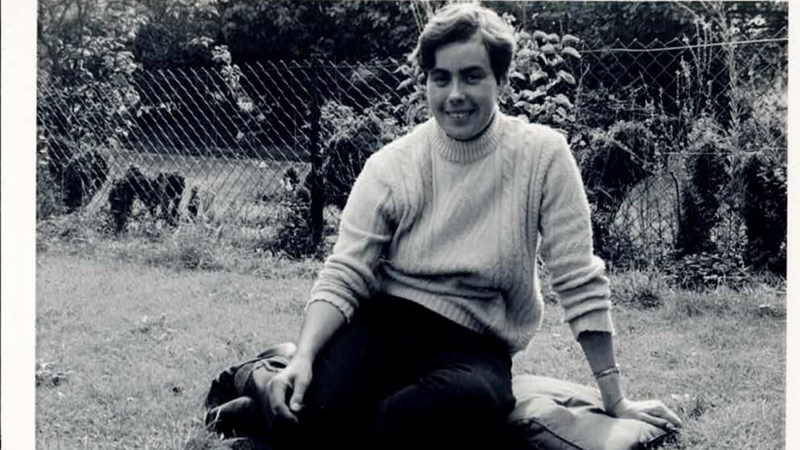
Gillian Baxter

Miriam A Bibby April 2025
In full view: Galloways as kingly gifts

Sometimes we miss the extraordinary in the ordinary. The rather ugly pot that rested on the mantelpieces of previous generations is now a rare antique; the dull old book with a battered cover contains a gem of wisdom; the old hat worn by a great-grandmother that’s kicked about throughout numerous house moves contains a feather from a now long-extinct species of bird.

It’s all too easy to overlook something special when combing texts for the one piece of information that you hope will make a difference to your research. I’ve grown used to reading masses of early texts, some of which reveal a pill-sized piece of useful knowledge (useful from my Galloway nag research perspective, that is), others of which reveal nothing, absolutely nothing, useful at all. I read them just in case.

I dread to think how many millions of words I’ve read over the years, not just relating to Galloways of course, but many of them related to horses. I’m an avid reader. I speed read, and I can get through a book of say 50,000 or 60,000 words in a single day. Then there’s skim-reading, a different process, one in which you skim the book for relevant material without engaging too deeply with theme or content. Between reading, writing, and looking after ponies, there’s not too much time left over in the 24 hours of a day.

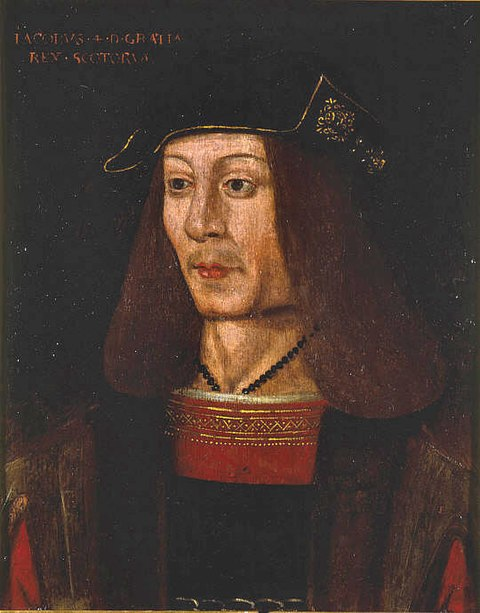
Since references to Galloways are relatively rare (and were much rarer before I started my research, since I’ve unearthed a lot more since then) every single reference counts.  I was pretty pleased with myself when I discovered that the sixteenth century Scottish bishop John Leslie (also Lesley) referred to the horses from Scotland, and specifically from Galloway, with enthusiasm. Leslie was the natural son of Gavin Leslie, a rector of Kingussie. Interestingly, when James IV of Scotland had made a major tour of his kingdom, riding 150 miles in a day, it was in the house of an earlier minister of Kingussie that he stayed overnight.

James IV of Scotland – rode 150 miles in a single day!

Bishop Leslie’s History of Scotland

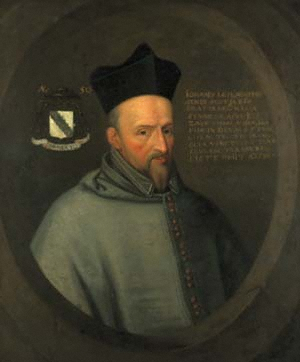
John Leslie (1527 – 1596), later the bishop of Ross, was a staunch supporter of Mary Queen of Scots. Indeed, he was one of her most loyal supporters and defenders.  In 1569 he wrote A Defence of the Honor of Marie, Queene of Scotland. A Roman Catholic like Mary, his religious career was naturally a tumultuous one, living as he did through Scotland’s Protestant Reformation. He was one of the major contenders in disputation with John Knox in 1561. Yet he was appointed to high offices, including being made one of the senators of the college of justice, and he was appointed with fifteen others as a commissioner to work on the revision of the laws of Scotland. The publication of the resulting Actis and Constitutiounis of the Realme of Scotland in 1566 was largely due to his dedication to the work.

Bishop John Leslie

Leslie went directly to Elizabeth I to plead Mary’s cause, but received short shrift. He then became involved in the notorious “plot” to marry Mary to the senior Catholic-sympathising nobleman of the time, the Duke of Norfolk, and was imprisoned in the Tower as a result. Here, Leslie began his project to write a history of Scotland, in the Scots language. It was finally published in 1578 in Latin in Rome, and contains the following gem about the horses from Galloway:

In Galloway ar horsmen, Barounes, and uthiris noble men mony: bot the grettest parte of the cuntrey is dedicate to the Kirk; for it hes by the Bischopes sait, and a collegeyiate kirke called Glencluden, it hes, I say, mony monasteries in quhilkes  Glenluse, and the quhyte Case or S. Ninianis ar principall… Quhen our hail cuntrey throuch bringis upe ambling horse, than cheiflie Galloway, that all utheris thay excell, I say,—thay uthiris excell be mony dayes Jornay, thay ar sa swift in body, albeit thay be small. Bot nathir thay mekle gret horse quhilkes being harnest, beiris armed men of weir, ar haldne sa nobil with our cuntrey men, or of sa gret pryce, as horse of midway stature, sa that thay be swifte and of a prettie forme; quhilkes in the grettest battelis hes oft done ws na little skaith.

[In Galloway are many horsemen, Barons, and other noble men, but the greatest part of the region is dedicated to the Church, for having in it the Bishop’s seat, and a collegiate church called Glencluden, it has, I say, many monasteries in which Glenluce and the White House or St Ninian’s are the main ones…When ambling horses are raised throughout our whole country, then [it is] chiefly in Galloway, [where] they excel all others, I say, – they excel all others by many day’s journey, they are so swift in body, although they are small. But the large great horse, harnessed up to bear men of war, is neither held to be as noble with our countrymen, nor of such great price, as horses of medium stature as long as they are fast and have a handsome form; which in the greatest battles has often done us no little harm. Trs. Miriam A Bibby]

Obviously in my search for Galloway information, I was thrilled to come across this endorsement in Leslie’s work, as well as references to the superbness of the Scottish court in the days of James IV. Leslie wrote that the Scottish lords and ladies all outshone the English who accompanied Princess Margaret, sister of Henry VIII, when she arrived in Scotland to marry James. He made particular references to the high quality of their dress, their jewels, and their “massy gold chains”, and also to the high quality of their horses. Well, I guess as a Scotsman he may have been a little bit biased. However, the Scots clearly loved fast, beautiful horses, and they loved to race them as well, so much so that a court poet of the period satirised them for betting too much on the races.

It was from Leslie that I also learned of James IV’s great horse ride to visit the far-flung parts of his kingdom. So, rather gloating over this wonderful information, I set it forth in my Galloway book. But I missed something really wonderful in Leslie’s work, the best information of all about the Galloway. And now I can share it with you.

Here’s the bit I missed first time round!

Going back to Leslie’s work in search of something entirely different, I came across the following:

For intertynement of freindship, the King of England send ane gentill man with horssis to the King and Quene, and sum of thame barde steille, for the Kings use, quhilk wer presentit the first day of October, and the messinger weille rewardit be the King, returnit into Ingland. And shortlie thaireftir, the King of Scotland send againe certane propper Scottis horssis, principallie of Galloway, with a greit number of guid Scottis halkeis to the King of Ingland ; so that be sic mutuall taikinnis and propoynes, the love and hartly kindnes mainetened and nourished betuix those tua princis, as betuix the fader and the sonne.

[For the entertainment of friendship, the King of England sent a gentleman with horses to the King and Queen [of Scots] and some of them with barding of steel for the king’s use, which were presented the first day of October, and the messenger, well rewarded by the king, returned to England. And shortly after, the King of Scotland sent again certain proper [true, genuine] Scottish horses, principally [those] of Galloway, with a great number of good Scottish hawks to the King of England; so that by mutual tokens and gifts, the love and hearty kindness [were] maintained and nourished between those two princes as between the father and the son. Trs. Miriam A Bibby]

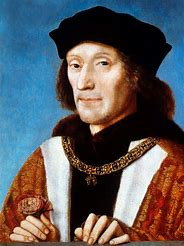
Henry VII of England

In other words, King Henry VII of England sent some horses as a gift to James IV in 1503, round about the time of the final negotiations relating to his daughter Margaret marrying the King of Scots. In return, James IV sent him “certain proper Scottish horses, principally those of Galloway”.

Big airpunching going on here!

Why is this so important? It matters because it shows that horses from Galloway were seen as a “proper” elite gift at the highest level – from king directly to king. The exchanging of horses had been an important part of international royal relations since at least the days of the pharaohs. Previously the most significant evidence that I’d had to argue the case for Galloways as elite gifts was the proposed gifting of one from the Archbishop of St Andrews to the Archbishop of Canterbury. Here was the final proof I needed to show the importance of Galloways as kingly gifts.

What’s more, this opens up far greater potential to argue the case for Galloways being exchanged beyond the island of Britain. I’m sure this occurred; it’s simply that they are not identified by that name in the correspondence. Both Bishop Leslie, and of course Mary Queen of Scots herself, had connections at the highest level in Europe. At this stage in Galloway history, it was perhaps the Catholic equine and equestrian networks that mattered most, and we know that soon after Henry VIII coming to the throne he would be in correspondence with the Gonzaga family of Italy about the cavalli corridori di Scotia (the running horses of Scotland) and exchanging horses from Britain with those of the Gonzaga razza, or breed.

Interestingly, later on the Galloways would become associated with the Presbyterian and Covenanting Scots rather than Catholics. One of the interesting things about the Galloway is how it shapeshifts through time, particularly from an English perspective.

Later still, the Galloway name would be carried forward by working people, the pack horse men and women, miners, and upland hill farmers. Their use of the term matters just as much to me as the fact that Galloways were important enough to be exchanged as gifts between the kings of Scotland and England in late medieval and early modern times.  

Much more remains to be explored, and watch this space!

Miriam A Bibby March 2025

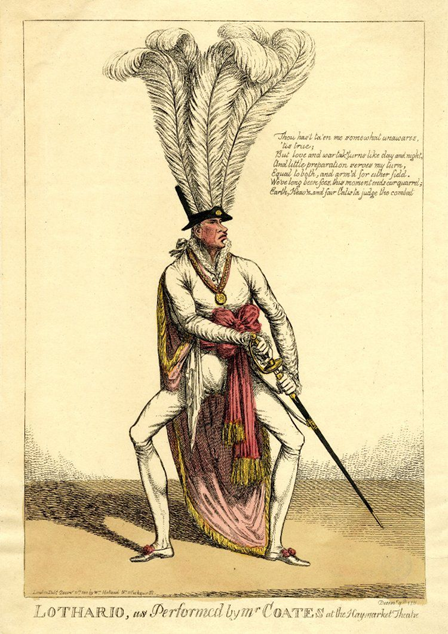
“While I live, I’ll crow”: the curious equine connections of Robert Coates, actor

When I came to spend some research time in Georgian England in the past year or two, I realised what an eccentrically horsey place it was. Of course, horses play an important part in the historical documents of the time and also the literature, including Jane Austen’s works. Horses were essential for personal transport and increasingly for public transport. (Thomas Almeroth-Williams’s book City of Beasts is a good place to start.)

Different breeds of horse were emerging to perform new functions, as were new styles of carriage and coach. This was the period in which the Thoroughbred and the first speedy roadsters and trotters began to be produced. Road improvements meant that people could travel further and faster than ever before – weather and health permitting – and the coach horse breeds in particular needed to be fast and enduring to meet some very critical deadlines on the new mail coaching routes. Highwaymen kept up the pace with their own mounts. Hunting squires wanted first class hunters, often with Thoroughbred breeding in them, and agricultural improvements and industrial developments increasingly required bigger, stronger horses to work the land and haul heavy loads.

Georgian eccentrics and their ponies

However, what I found really interesting about the period was the number of obvious eccentrics who found horses a useful means of augmenting their eccentricity and visibility. Like any modern internet influencer, they wanted to be seen and draw the crowds. One such was the peculiar dentist and corset-maker Martin van Butchell who rode round London on a pony painted with coloured spots. He also kept the embalmed body of his first wife in his home throughout his second marriage.

Van Butchell and his long-suffering pony probably deserve a blog post to themselves, but today I’m writing about Robert Coates (1772 – 1848), actor (well, that’s how he viewed himself – opinions may differ). Coates was the son of a wealthy plantation owner from Antigua in the West Indies. From his father, he inherited a lot of money and a great love of diamonds. Fortunately, his inheritance also included dad’s diamond collection, and Coates made sure everyone knew that by wearing them in abundance on the various costumes he concocted, earning him his first nickname of “Diamond Coates”.

His performance of Romeo in Romeo and Juliet was so bizarre that people found it hilarious. Decked out in a blue cloak, red pantaloons and an opera hat with plumes, plus lashings of diamonds, his trousers splitting on stage only added to the amusement and earned him the enduring alternative nickname of Robert “Romeo” Coates. On one occasion, he carefully dusted the stage before going into his theatrical death throes as Romeo. Once when he lost a diamond buckle on stage, he stopped the performance and crawled about looking for it.

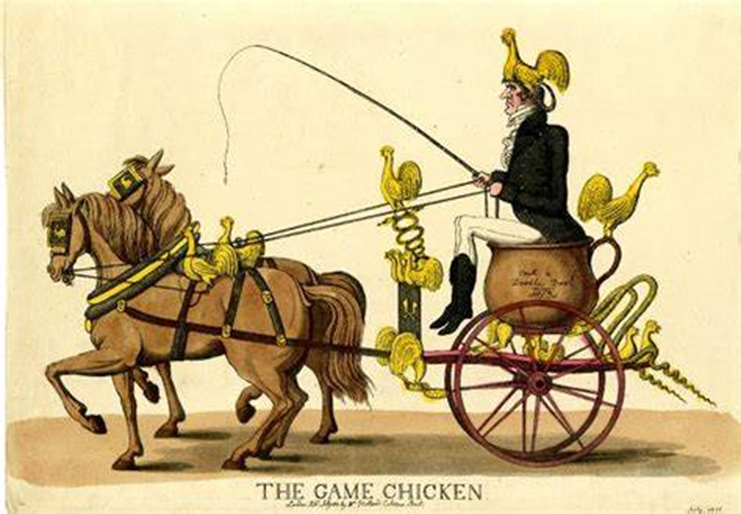
The first horsey connection comes through his fantastically decorated carriage. He usually wore furs when he went out, even in the hottest weather. His heraldic device was a crowing cock, with the legend: “While I live, I’ll crow” prominently displayed on his carriage which was drawn by a pair of beautiful ponies. Note: all true eccentrics have ponies, not horses. Or even better, Galloways or Gallowas.

Did you say Galloway?!

Those of you who follow my work will know that I am somewhat obsessed by the history of the Galloway Nag, and my Galloway radar (Gallowaydar?) went into overdrive when I came across a character in a fictional tale that seemed to be broadly based on the life of Coates – and the story had a suitably bizarre reference to Galloways.

The tale seems to have first appeared in an anonymous book titled: Richmond; or Scenes in the Life of a Bow Street Runner in 1827. Peter Haining, who included the story in his anthology Murder at the Races, attributes it to journalist Thomas Gaspey (1788-1871), who was a crime reporter for the Morning Chronicle.

The story is about horse racing in Lyndhurst in the New Forest, and refers to races between still wild local forest ponies and racehorses, which is interesting in itself. Haining produces a quote from 1859 that suggests this was a fairly regular event in the early nineteenth century: “These stirring spectacles between race horses and the forest ponies have frequently formed the subject of pictorial illustration and remained long in the imagination of those who saw them.” (William White, Gazetteer and Dictionary of Hampshire.)

A Racing Swindle: the plot

The plot of “Richmond’s”, or Gasper’s, tale revolves round a wealthy and fashionable young West Indian, Ellice Blizzard, described as “descended by the father’s side from a family of West India planters, and by the mother’s from an African princess, whom the chances of negro warfare had consigned to slavery in the British colonies”. 

Whether this reflects Coates’s own family history, or what people thought about it, is not certain, but the description of Blizzard’s arrival in Lyndhurst does suggest an exaggerated version of Coates: “The first object that attracted my notice was a carriage of the most grotesque construction – an odd mixture of the antique and the modern – drawn by no less than ten horses, with five postilions in outré liveries”.

The passenger is equally imposing: “He wore a high black fur cap, shaped somewhat like a bishop’s mitre, and similar to those which I have seen worn by Armenian merchants on the exchange; but with this difference, that there was a plume of feathers stuck in the front, and supported by a knot of gaudy ribbands of many colours, like the cockade of a recruiting sergeant.”

Young wealthy eccentric Mr Blizzard has almost inevitably fallen into the hands of swindlers and crooks, who have told him that if he wishes to be truly up-to-the-minute and maintain his eccentric lead, he should now reject the fashionable races that most people attend and go to the New Forest to see the pony and racehorse contests there. Of course, this is because they see far greater opportunities to fleece him.

Galloway reindeer?!

The story reveals the tropes, language, and attitudes of the times, racial categorisation and stereotypes among them. Blizzard, having deliberately set out to forge an eccentric character, according to Gasper “had set his heart upon having a Lapland sledge drawn by reindeer; but this was an equipage all his wealth could not command. The sledge, indeed, or something called so, he might have procured in the metropolis; but the reindeer were not to be had, and they could not be manufactured even by London ingenuity, out of any other species of animal that would draw in a carriage. I have since understood, indeed, that one of Mr Blizzard’s Hebrew friends did make the attempt to transform a set of galloways into reindeer by decorating their heads with antlers, and other contrivances; but the horses could not be made into passable stags, and the attempt was abandoned, to the great grief of the Jew speculator, and the sad disappointment of Blizzard, who had to content himself with ordinary steeds for his extraordinary carriage”.

It’s heavy-handed and unsubtle humour, making play on the presumed stupidity or avarice of “foreigners”, and my reason for quoting it at all is firstly, that references to Galloways are sufficiently irregular and few that every single one has relevance. Secondly, Galloways themselves were frequently the butt of satire and humour for no other reason than being Galloways. At times they too were viewed as foreign and outlandish, particularly in England, and as being therefore an appropriate target for derision, however good they were.

Back to Robert Coates

The real Robert Coates continued to act, sometimes bribing stage managers and always causing a stir, until the crowds tired of him. He called himself the “Celebrated Philanthropic Amateur” and seems to have played it entirely straight – at least in his own mind. However, it has been suggested that he was parodying stage performances, and perhaps we should credit him as providing an early form of Monty Python-esque humour. If so, he was not just a passing oddity of the stage, but an avant-garde performer. Like many young men who inherited massive fortunes, he later in life found himself financially down on his luck.

Horses had a part in his final, macabre appearance in London. At the age of 78, he was involved in a street accident when leaving the Theatre Royal in Drury Lane. Somehow he was caught up and crushed between two horse-drawn vehicles, a Hansom cab and someone’s private carriage, dying six days later. Interestingly, the coroner called his death “manslaughter by person or persons unknown”. Did someone have it in for Robert Coates? Or was it just a case of dangerous driving? The passage of time means we will probably never know, but the streets of London were undoubtedly drabber after his death.

Miriam A Bibby January 2025

Listen again to my Black Beauty chat with ABC Radio Nightlife

Back in November (24 November 2024 to be precise) I chatted with Suzanne Hill of ABC Radio Nightlife about the publication and impact of Anna Sewell’s influential text Black Beauty on 24 November 1877. You can listen again here: https://www.abc.net.au/listen/programs/nightlife/this-week-in-history-the-publication-of-black-beauty-/10464171

Horse in bridle and headpiece, silhouette against rising sun. 
ABC Radio Nightlife logo

Program:This Week In History: The Publication of Black Beauty

In which I apologise to the ghost of Catherine Cookson

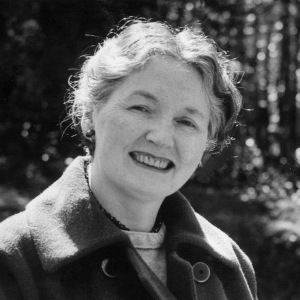
I owe the shade of novelist Catherine Cookson an apology. When I was growing up in North East England, Cookson (1906-1998), a local writer from South Shields, was popular with what I considered to be the older generation. References to her were met with a certain amount of eye-rolling from anyone in their teens or twenties.

Catherine Cookson

We, the post-war generations, whether Teddy Boys and Girls, Mods, Rockers, Hippies, Punks, New Romantics, Goths, Ravers, Skins, Skas, Northern Soul aficionados or any combination of the aforementioned, and then some, simply didn’t read Cookson. We were all in our own ways rebels, and the past she described was inspiration for the rebellion. Cookson’s gritty tales of hardship belonged to the days of the Jarrow March and Manchester cotton mills. They were either misery memoirs or bodice rippers, stories of exploitative (and probably moustache-twirling) squires and downtrodden miners and laundrymaids. Our world was going to be different.

I realise I’m not speaking for all those generations here, or even completely for myself. I listened to enough stories from my own relatives of hardship during the Great Depression to know and appreciate wholeheartedly that it is part of my inheritance. I knew families where Cookson was read as avidly by the children (mostly daughters) as their parents (mostly mothers).

I suppose of all the post-war youth movements I most identified (somewhat vaguely) with hippies. This was really a diversion for a while, because at my core I identified (and still do) as a horse person. When I was growing up, someone with an interest in horses would have been viewed (incorrectly) as middle class. You can be a working-class horse person. I am a working-class horse person. I lived in a flat little better than a slum in Newcastle, then a council house; I went to a working-class comprehensive in a mining town, and attended a riding school where most of the kids were working class. Many of my friends who have kept horses are working class too, and many of the horses I first encountered were working horses on the streets of Newcastle or the pit ponies at the colliery where my uncle worked. One day I might tell you of the culture shock I experienced on my first (and only) encounter with the University of Nottingham Equestrian Society.

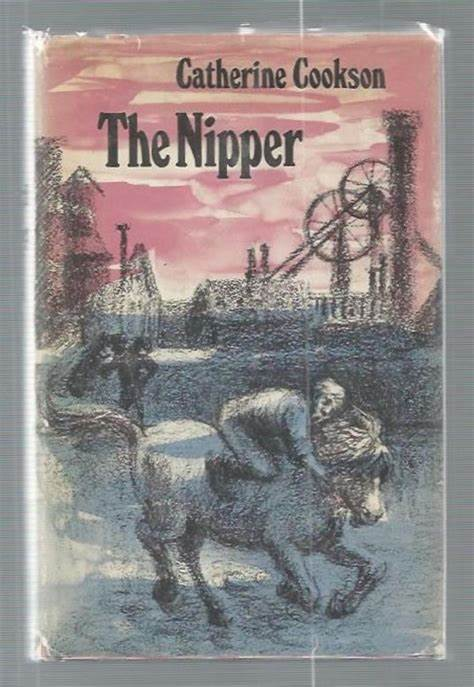
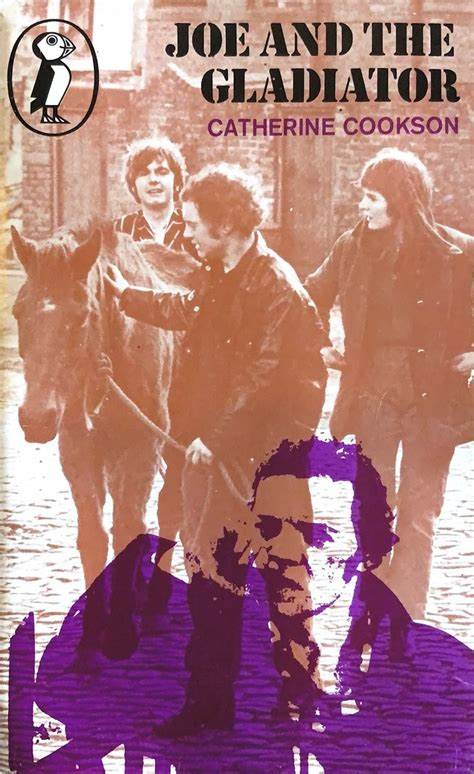
This is where Catherine Cookson comes in, and why I owe her an apology. Cookson was a prolific writer, with 104 published novels, the first of which came out in 1950. Her work was incredibly popular, with several books in the best-seller list at a time. They transferred well to television, too. When, very recently, I came across two of her books that focus on the horse-human relationship (“The Nipper” and “Joe and the Gladiator”) I read them out of curiosity. One of the great things about ageing is that you spend more time doing the things you really want to do and less time “Worrying What People Will Think And Am I Fitting In With My Peers”. I was brought up in that school and now I blow it a loud raspberry.

Let me say right away these are cracking books. They are well worth the brief amount of time it will take anyone to read them. On the basis of these two novels, both of which are aimed at what would now be called “the young adult” (YA) market, I appreciate Cookson’s ability to characterise, to structure a story, and most of all, her skill in creating the complex, ambivalent, frustrating, infuriating circumstances of poverty. “Joe and the Gladiator” is a simple story, about a young lad and the horse he takes on after the death of its elderly owner, a rag and bone man. “The Nipper” is the tale of a young lad and the galloway (gallowa) to whom he is so dedicated that when the pony is taken to work in the pit, he follows it to labour alongside it underground himself. Certainly, aspects of the plot are more than a little creaky, but Cookson handles it so deftly that when you hear it straining at the edges, you give her the benefit of the doubt and carry on reading.

Cookson always described her books as “readable social history of the North East interwoven into the lives of the people”, rather than romances. It’s a very reasonable self-assessment from a woman who started at the bottom of the stack and rose to be an extremely knowledgeable writer of historical fiction. The plausibility of her work is not simply informed by her own experiences, but also by extensive research. As it says in the introduction to “The Nipper”: “There is nothing sentimental about her writing; she is unrelenting in the strong images she invokes and the characters she portrays”.

You can keep your tales of prancy dancy fancy stallions with their L’Oreal manes blowing in the wind and their hyperinflated nostrils working overtime – give me a working-class horse tale any day of the week. These are two the best.

How the Scottish pownie conquered the world

I’m about to take you on an etymological wild ride. This History on Horseback blog post was inspired by a great map that’s currently doing the rounds, which shows that the word for “pony” in nearly every European language (apart from Polish) is some variation of er, pony. Pony in England, Germany, Iceland, Italy, the Netherlands; poney in France; ponni in Norway and ponny in Sweden; poni in Russia. And so on.

So where does the term pony come from? It first appears (as poynie) in 1657 CE in Scotland. There are all sorts of suggestions out there as to its origins, including some beautifully constructed arguments showing it descends directly from the Indo-European for a small or young animal, and that somehow, magically, this was picked up and transmuted into pony by the Scots (or more usually the English, who get credited for a lot of things Scottish) in 1657.

The issue with this is that pony, or rather poynie, closely followed by powny in 1659, and subsequently pownie, appears quite suddenly and specifically in Scottish documentary sources, and without apparent immediate (or even older) precedents. Certainly, the arrival of a term in print or manuscript usually post-dates a period in which a word has been used in oral transmission. In that sense, pownie (alternate Scottish spelling powney, pouny, pounie, and other variants) may have been around for a long time.

The Dictionary of the Older Scottish Tongue (available online) gives an excellent summary of the first sources for the term pownie as applied to a small horse, both pre- and post-1700. They are available here (and note that the dictionary says the word is “of unknown origin”. The derivations included are conjectural):

Pre-1700: https://dsl.ac.uk/entry/dost/powny

1700 and later: https://dsl.ac.uk/entry/snd/pownie_n1

The Oxford English Dictionary confirms that pony is a Scots word, or at least first appears in Scotland in Scottish documentary sources, as powney or pownie. The OED rather half-heartedly suggests that it might be from the old French poulenet, little foal, as a diminutive of poulaine, which would indeed lead nicely back to Latin pullus, a foal and the whole small or young animal debate with its Indo-European language roots.

There’s some sketchy support for this in the Scots language, since a pownie or powney is not confined to a description for equines. A pownie can also be a peacock or a turkey hen. The former is probably the short-form of pownie-cock, a peacock. Interestingly, a turkey-cock in Scots is also a poullie, which is very close to the term pullet, meaning a young chicken both in English and French, and thus a turkey-hen can also be a poullie-hen. To confuse things, poullie hens (no hyphen) are plucked-looking hens, and the adjective poullie means to “look plucked-like”. So poullie and pownie are both Scots words applied to fowl, but equids are only ever described as pownies and never poullies to my knowledge. 

Is this linguistic cross-over between ponies and fowl in Scots the source of a poullie-pullet-poulenet-pownie confusion? Possibly. Indeed, it even seems likely to me. Also, the poulenet origin suggestion for pony is very neat, but it doesn’t ring quite true either, and the OED itself seems unconvinced by its own poulenet suggestion for the origin of pony. The adoption of the poulenet-pullus derivation, which appears in both the OED and DOST, is likely to result more from dictionary compilers trying to make sense of a word that suddenly appears in Scots in 1659 without apparent rhyme, reason, or antecedents. 

As an aside, a pownie in Scots is also, for obvious reasons, the base of a trestle table (similar to the use of horse, as in sawhorse in carpentry or vaulting horse in gymnastics). All the Scots terms previously listed (pouillie, pownie etc) can be found in Warrack’s Scots Dialect Dictionary and in DOST.

I’d now like to call as evidence Dr Samuel Johnson and will ask him to bring his dictionary too. Dr Johnson’s relationship with horses and Scotland is an interesting one. During his journey round Scotland with the Scottish writer James Boswell, Johnson visited the island of Col in the Hebrides. Here, as reported by Boswell, the young laird of Col and his servants “ran to some little horses, called here ‘Shelties,’ that were running wild on a heath, and catched one of them. We had a saddle with us, which was clapped upon it, and a straw halter was put on its head. Dr Johnson was then mounted, and Joseph very slowly and gravely led the horse. I said to Dr Johnson, ‘I wish, sir, the club saw you in this attitude.’”

There’s also a splendid (and hilarious) anecdote relating to horses and Johnson’s dictionary. When asked why he had incorrectly described the horse’s pastern as the knee of the horse in his great work, Johnson’s response to the questioner was “Ignorance, madam, pure ignorance”.

Thus, when he also said in his dictionary about the origins of the term pony “I know not the origins of this word, unless it be corrupted from puny”, many equine historians, including me, identified this as another Johnsonism, and took umbrage at his ignorance. The Scots understood the value of small, hardy, tough horses, had done for centuries, and would never have been so dismissive of them as to describe them as puny. Their little horses were highly valued, and they were produced in great numbers for the home and export markets.

However, Johnson may have been right, and he may not have been intending it entirely as a criticism. Back to the dictionary definitions.

The Oxford English Dictionary reveals that the word puny as an adjective means “undersized; weak, feeble; petty. Hence -iness [puniness] noun. (f. sixteenth century phonetic spelling of PUISNE)”.

Check out puisne in the same dictionary and you will find it is both an adjective and a noun, and derived from a French legal term, puisné: “(judge), judge of superior court inferior in rank to Chief Justice; (law) later, subsequent (to), […] [OF after f. L. postea + né born f. L natus) cf. PUNY].” In other words, a puisne judge was a judge with inferior rank in a superior court on the basis of being “born later”, ie younger, or less experienced, than a Chief Justice. Fans of the humorous Brothers in Law books by Henry Cecil will see how this is witnessed in the career of Roger Thursby as he goes from a junior in chambers to a QC. It wasn’t pejorative when used legally, simply a description of a junior in the legal profession with his career yet to make.

Once puisne changed its English spelling to puny (apparently in the sixteenth century), it took on a disparaging meaning. It will also perhaps not come as a surprise that according to Warrack’s Scots Dialect Dictionary (although none of the other Scots dictionaries I’ve consulted) one word for puny in Scots is “pouny”.

In fact, I’d say that any linguist would be very hard pressed to construct a standard linguistic ancestry tree for any of the various Scots regional words for puny. They include: byack, undocht, wandocht, smaffan, scrat, myaat, fere, whilberty, croozumit, snaggerel, warwoof, baglin, othy, yan, yurlin, sherm, yiff-yaff, dachan, shilpie, snauchle, snyachle, snachel, snackel, whirly, and whurly. If anything, this tells me not to judge words in the Scots language using standard procedures for English or other languages of Indo-European origin. And that goes for the term pownie too.

However, if deriving ultimately from puisne, did the Scots intend pownie disparagingly? I don’t believe so. I think it’s probably intended, like pownie-cock for a peacock, as a short form of “pownie-horse”: a little horse, which would previously have been called a nag, which is also not a pejorative term. Nag, naigie, or naig-horse, all Scots terms, simply mean a small riding horse. Usage of terms can be very flexible and meaningful for the users without having the specificity required by dictionary compilers. For comparison, the term “poney Galloways” occurs in mining references in North East England in the eighteenth century, referring to the animals that would later generically become known as “pit ponies”, whatever their size.

Conclusion: the French term puisné, meaning younger or lower in rank, but frequently used of judges, so not an indication of general inferiority, but rather youth and inexperience, became puny in English and acquired derogatory characteristics in the sixteenth century. It may have entered Scots at the same time in the form pouny meaning puny or little, which I argue is a plausible reason for the Scots term pownie for a small equine to come into being. So there we have the story of the little equine that conquered the world: the Scots word pownie for a small equine became pony and was taken up enthusiastically across Europe and beyond. Let me stress once again that it’s a word that originates in the Scots language, in Scotland, NOT in England. Scots and English have common ancestry but they are not the same language.

It’s also interesting in that the Scots had long had an alternative term for small equines, and that was shelt, or sheltie, applied sometimes to Shetlands and sometimes more generically. Today it is almost universally applied to Shetland ponies, but that was not always the case.

Pony is a term that can be used with pride and appreciation of the small equines who carried the world on their shoulders for centuries, before those oversized horses came along. It would be ironic if the name for smaller equines should derive from puisné, later born, since ponies are the originals, the elder, not the younger in the equine relationship. Large horses came after them.

It’s also interesting that the term pony first appears in documentary sources at a time when there was increasing interest in breeding larger horses, particularly for war, during the Commonwealth in Britain. If the term pony does derive ultimately from puisné, the French, of course, may have some justification in claiming the French language as the source and inspiration for pony. It’s also a little ironic, considering they are one of the countries that has adopted the term, as “poney”. Back to its roots, perhaps?

Miriam A Bibby August 2024

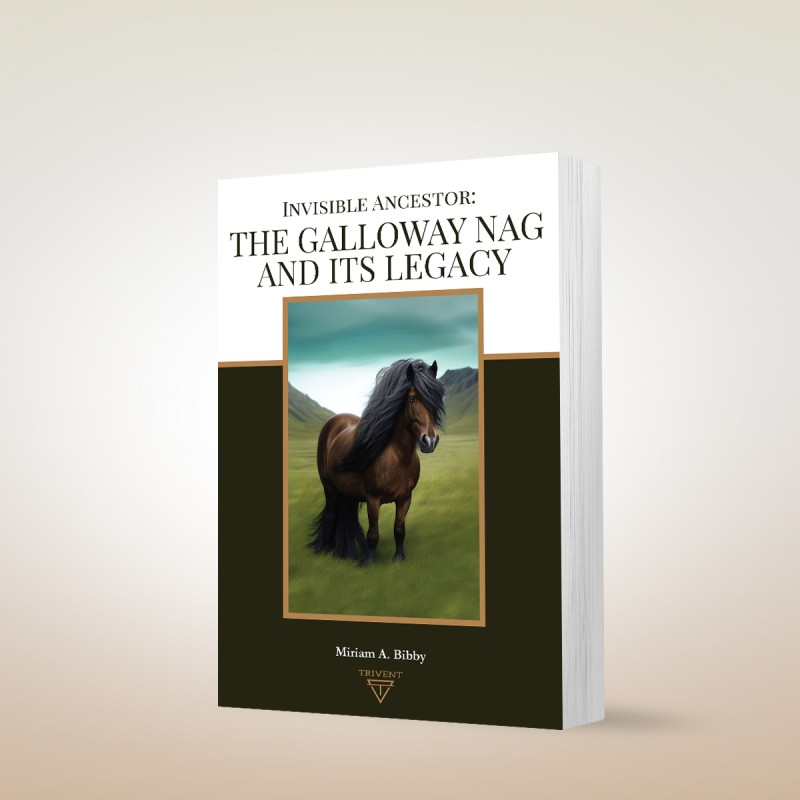
“Invisible Ancestor: the Galloway Nag and its Legacy” by Dr Miriam A Bibby is now available!

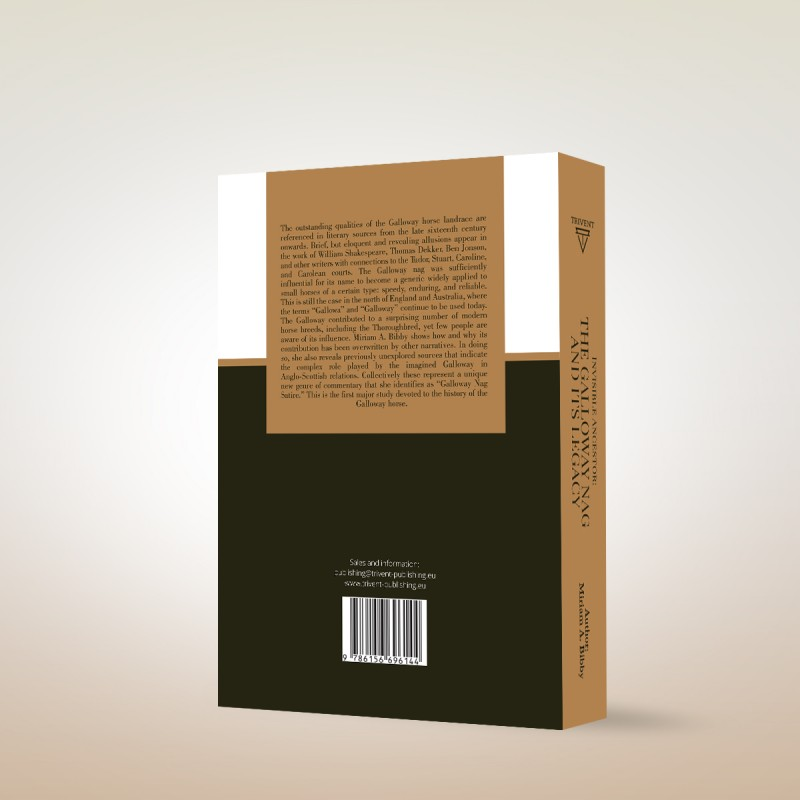
The outstanding qualities of the Galloway horse landrace are referenced in literary sources from the late sixteenth century onwards. Brief, but eloquent and revealing allusions appear in the work of William Shakespeare, Thomas Dekker, Ben Jonson, and other writers with connections to the Tudor, Stuart, Caroline, and Carolean courts. The Galloway nag was sufficiently influential for its name to become a generic widely applied to small horses of a certain type: speedy, enduring, and reliable. This is still the case in the north of England and Australia, where the terms “Gallowa” and “Galloway” continue to be used today. The Galloway contributed to a surprising number of modern horse breeds, including the Thoroughbred, yet few people are aware of its influence. Miriam A. Bibby shows how and why its contribution has been overwritten by other narratives. In doing so, she also reveals previously unexplored sources that indicate the complex role played by the imagined Galloway in Anglo-Scottish relations. Collectively these represent a unique new genre of commentary that she identifies as “Galloway Nag Satire.” This is the first major study devoted to the history of the Galloway horse. You can purchase Invisible Ancestor from the publisher Trivent Publishing here: https://trivent-publishing.eu/home/181-336-galloway-nag.html#/30-cover-ebook

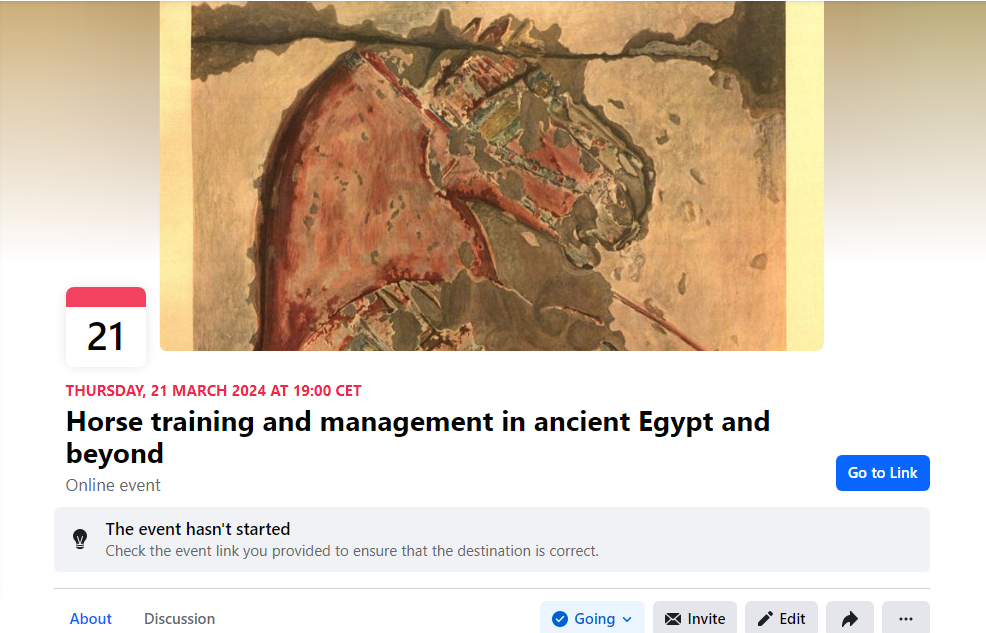
Seminar: Horse Training and Management in Ancient Egypt and Beyond

There’s still time to register for and attend the joint Cheiron-Equine History Collective seminar this evening on the topic of Horse Training and Management in Ancient Egypt. Presenters are Lonneke Delpeut, Alberto Pollastrini, and myself. We’re looking forward to it – see you there! Check out the event’s Facebook page for more details.

https://www.facebook.com/events/368891569374953

Saints and Sinners on Horseback Volume I is now available

Editing “Saints and Sinners on Horseback” has been a joy, and I’m thrilled to see that the print version of the volume is now available. Here’s a little taste of what’s in it. Find out more on the Trivent Publishing website, where you can also download the introduction free of charge: https://trivent-publishing.eu/home/156-239-saints-and-sinners-on-horseback-vol-1.html#/30-cover-ebook