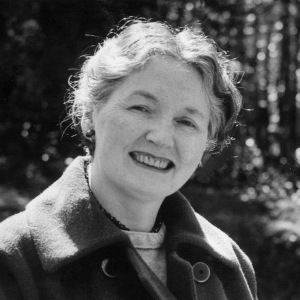
I owe the shade of novelist Catherine Cookson an apology. When I was growing up in North East England, Cookson (1906-1998), a local writer from South Shields, was popular with what I considered to be the older generation. References to her were met with a certain amount of eye-rolling from anyone in their teens or twenties.
Catherine Cookson
We, the post-war generations, whether Teddy Boys and Girls, Mods, Rockers, Hippies, Punks, New Romantics, Goths, Ravers, Skins, Skas, Northern Soul aficionados or any combination of the aforementioned, and then some, simply didn’t read Cookson. We were all in our own ways rebels, and the past she described was inspiration for the rebellion. Cookson’s gritty tales of hardship belonged to the days of the Jarrow March and Manchester cotton mills. They were either misery memoirs or bodice rippers, stories of exploitative (and probably moustache-twirling) squires and downtrodden miners and laundrymaids. Our world was going to be different.
I realise I’m not speaking for all those generations here, or even completely for myself. I listened to enough stories from my own relatives of hardship during the Great Depression to know and appreciate wholeheartedly that it is part of my inheritance. I knew families where Cookson was read as avidly by the children (mostly daughters) as their parents (mostly mothers).
I suppose of all the post-war youth movements I most identified (somewhat vaguely) with hippies. This was really a diversion for a while, because at my core I identified (and still do) as a horse person. When I was growing up, someone with an interest in horses would have been viewed (incorrectly) as middle class. You can be a working-class horse person. I am a working-class horse person. I lived in a flat little better than a slum in Newcastle, then a council house; I went to a working-class comprehensive in a mining town, and attended a riding school where most of the kids were working class. Many of my friends who have kept horses are working class too, and many of the horses I first encountered were working horses on the streets of Newcastle or the pit ponies at the colliery where my uncle worked. One day I might tell you of the culture shock I experienced on my first (and only) encounter with the University of Nottingham Equestrian Society.
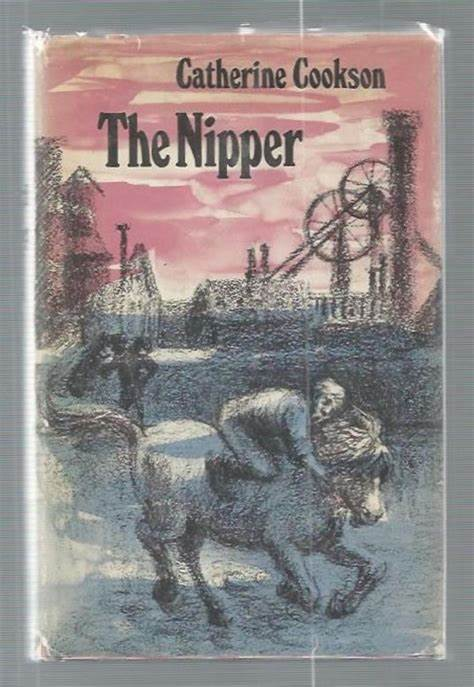
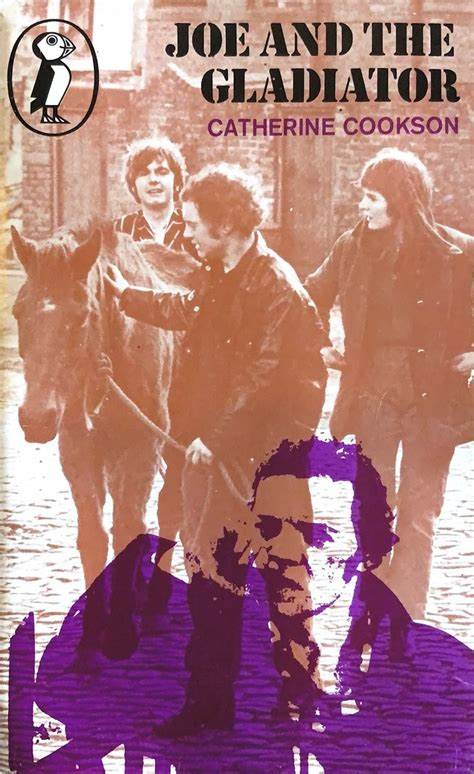
This is where Catherine Cookson comes in, and why I owe her an apology. Cookson was a prolific writer, with 104 published novels, the first of which came out in 1950. Her work was incredibly popular, with several books in the best-seller list at a time. They transferred well to television, too. When, very recently, I came across two of her books that focus on the horse-human relationship (“The Nipper” and “Joe and the Gladiator”) I read them out of curiosity. One of the great things about ageing is that you spend more time doing the things you really want to do and less time “Worrying What People Will Think And Am I Fitting In With My Peers”. I was brought up in that school and now I blow it a loud raspberry.
Let me say right away these are cracking books. They are well worth the brief amount of time it will take anyone to read them. On the basis of these two novels, both of which are aimed at what would now be called “the young adult” (YA) market, I appreciate Cookson’s ability to characterise, to structure a story, and most of all, her skill in creating the complex, ambivalent, frustrating, infuriating circumstances of poverty. “Joe and the Gladiator” is a simple story, about a young lad and the horse he takes on after the death of its elderly owner, a rag and bone man. “The Nipper” is the tale of a young lad and the galloway (gallowa) to whom he is so dedicated that when the pony is taken to work in the pit, he follows it to labour alongside it underground himself. Certainly, aspects of the plot are more than a little creaky, but Cookson handles it so deftly that when you hear it straining at the edges, you give her the benefit of the doubt and carry on reading.
Cookson always described her books as “readable social history of the North East interwoven into the lives of the people”, rather than romances. It’s a very reasonable self-assessment from a woman who started at the bottom of the stack and rose to be an extremely knowledgeable writer of historical fiction. The plausibility of her work is not simply informed by her own experiences, but also by extensive research. As it says in the introduction to “The Nipper”: “There is nothing sentimental about her writing; she is unrelenting in the strong images she invokes and the characters she portrays”.
You can keep your tales of prancy dancy fancy stallions with their L’Oreal manes blowing in the wind and their hyperinflated nostrils working overtime – give me a working-class horse tale any day of the week. These are two the best.
I’m about to take you on an etymological wild ride. This History on Horseback blog post was inspired by a great map that’s currently doing the rounds, which shows that the word for “pony” in nearly every European language (apart from Polish) is some variation of er, pony. Pony in England, Germany, Iceland, Italy, the Netherlands; poney in France; ponni in Norway and ponny in Sweden; poni in Russia. And so on.
So where does the term pony come from? It first appears (as poynie) in 1657 CE in Scotland. There are all sorts of suggestions out there as to its origins, including some beautifully constructed arguments showing it descends directly from the Indo-European for a small or young animal, and that somehow, magically, this was picked up and transmuted into pony by the Scots (or more usually the English, who get credited for a lot of things Scottish) in 1657.
The issue with this is that pony, or rather poynie, closely followed by powny in 1659, and subsequently pownie, appears quite suddenly and specifically in Scottish documentary sources, and without apparent immediate (or even older) precedents. Certainly, the arrival of a term in print or manuscript usually post-dates a period in which a word has been used in oral transmission. In that sense, pownie (alternate Scottish spelling powney, pouny, pounie, and other variants) may have been around for a long time.
The Dictionary of the Older Scottish Tongue (available online) gives an excellent summary of the first sources for the term pownie as applied to a small horse, both pre- and post-1700. They are available here (and note that the dictionary says the word is “of unknown origin”. The derivations included are conjectural):
The Oxford English Dictionary confirms that pony is a Scots word, or at least first appears in Scotland in Scottish documentary sources, as powney or pownie. The OED rather half-heartedly suggests that it might be from the old French poulenet, little foal, as a diminutive of poulaine, which would indeed lead nicely back to Latin pullus, a foal and the whole small or young animal debate with its Indo-European language roots.
There’s some sketchy support for this in the Scots language, since a pownie or powney is not confined to a description for equines. A pownie can also be a peacock or a turkey hen. The former is probably the short-form of pownie-cock, a peacock. Interestingly, a turkey-cock in Scots is also a poullie, which is very close to the term pullet, meaning a young chicken both in English and French, and thus a turkey-hen can also be a poullie-hen. To confuse things, poullie hens (no hyphen) are plucked-looking hens, and the adjective poullie means to “look plucked-like”. So poullie and pownie are both Scots words applied to fowl, but equids are only ever described as pownies and never poullies to my knowledge.
Is this linguistic cross-over between ponies and fowl in Scots the source of a poullie-pullet-poulenet-pownie confusion? Possibly. Indeed, it even seems likely to me. Also, the poulenet origin suggestion for pony is very neat, but it doesn’t ring quite true either, and the OED itself seems unconvinced by its own poulenet suggestion for the origin of pony. The adoption of the poulenet-pullus derivation, which appears in both the OED and DOST, is likely to result more from dictionary compilers trying to make sense of a word that suddenly appears in Scots in 1659 without apparent rhyme, reason, or antecedents.
As an aside, a pownie in Scots is also, for obvious reasons, the base of a trestle table (similar to the use of horse, as in sawhorse in carpentry or vaulting horse in gymnastics). All the Scots terms previously listed (pouillie, pownie etc) can be found in Warrack’s Scots Dialect Dictionary and in DOST.
I’d now like to call as evidence Dr Samuel Johnson and will ask him to bring his dictionary too. Dr Johnson’s relationship with horses and Scotland is an interesting one. During his journey round Scotland with the Scottish writer James Boswell, Johnson visited the island of Col in the Hebrides. Here, as reported by Boswell, the young laird of Col and his servants “ran to some little horses, called here ‘Shelties,’ that were running wild on a heath, and catched one of them. We had a saddle with us, which was clapped upon it, and a straw halter was put on its head. Dr Johnson was then mounted, and Joseph very slowly and gravely led the horse. I said to Dr Johnson, ‘I wish, sir, the club saw you in this attitude.’”
There’s also a splendid (and hilarious) anecdote relating to horses and Johnson’s dictionary. When asked why he had incorrectly described the horse’s pastern as the knee of the horse in his great work, Johnson’s response to the questioner was “Ignorance, madam, pure ignorance”.
Thus, when he also said in his dictionary about the origins of the term pony “I know not the origins of this word, unless it be corrupted from puny”, many equine historians, including me, identified this as another Johnsonism, and took umbrage at his ignorance. The Scots understood the value of small, hardy, tough horses, had done for centuries, and would never have been so dismissive of them as to describe them as puny. Their little horses were highly valued, and they were produced in great numbers for the home and export markets.
However, Johnson may have been right, and he may not have been intending it entirely as a criticism. Back to the dictionary definitions.
The Oxford English Dictionary reveals that the word puny as an adjective means “undersized; weak, feeble; petty. Hence -iness [puniness] noun. (f. sixteenth century phonetic spelling of PUISNE)”.
Check out puisne in the same dictionary and you will find it is both an adjective and a noun, and derived from a French legal term, puisné: “(judge), judge of superior court inferior in rank to Chief Justice; (law) later, subsequent (to), […] [OF after f. L. postea + né born f. L natus) cf. PUNY].” In other words, a puisne judge was a judge with inferior rank in a superior court on the basis of being “born later”, ie younger, or less experienced, than a Chief Justice. Fans of the humorous Brothers in Law books by Henry Cecil will see how this is witnessed in the career of Roger Thursby as he goes from a junior in chambers to a QC. It wasn’t pejorative when used legally, simply a description of a junior in the legal profession with his career yet to make.
Once puisne changed its English spelling to puny (apparently in the sixteenth century), it took on a disparaging meaning. It will also perhaps not come as a surprise that according to Warrack’s Scots Dialect Dictionary (although none of the other Scots dictionaries I’ve consulted) one word for puny in Scots is “pouny”.
In fact, I’d say that any linguist would be very hard pressed to construct a standard linguistic ancestry tree for any of the various Scots regional words for puny. They include: byack, undocht, wandocht, smaffan, scrat, myaat, fere, whilberty, croozumit, snaggerel, warwoof, baglin, othy, yan, yurlin, sherm, yiff-yaff, dachan, shilpie, snauchle, snyachle, snachel, snackel, whirly, and whurly. If anything, this tells me not to judge words in the Scots language using standard procedures for English or other languages of Indo-European origin. And that goes for the term pownie too.
However, if deriving ultimately from puisne, did the Scots intend pownie disparagingly? I don’t believe so. I think it’s probably intended, like pownie-cock for a peacock, as a short form of “pownie-horse”: a little horse, which would previously have been called a nag, which is also not a pejorative term. Nag, naigie, or naig-horse, all Scots terms, simply mean a small riding horse. Usage of terms can be very flexible and meaningful for the users without having the specificity required by dictionary compilers. For comparison, the term “poney Galloways” occurs in mining references in North East England in the eighteenth century, referring to the animals that would later generically become known as “pit ponies”, whatever their size.
Conclusion: the French term puisné, meaning younger or lower in rank, but frequently used of judges, so not an indication of general inferiority, but rather youth and inexperience, became puny in English and acquired derogatory characteristics in the sixteenth century. It may have entered Scots at the same time in the form pouny meaning puny or little, which I argue is a plausible reason for the Scots term pownie for a small equine to come into being. So there we have the story of the little equine that conquered the world: the Scots word pownie for a small equine became pony and was taken up enthusiastically across Europe and beyond. Let me stress once again that it’s a word that originates in the Scots language, in Scotland, NOT in England. Scots and English have common ancestry but they are not the same language.
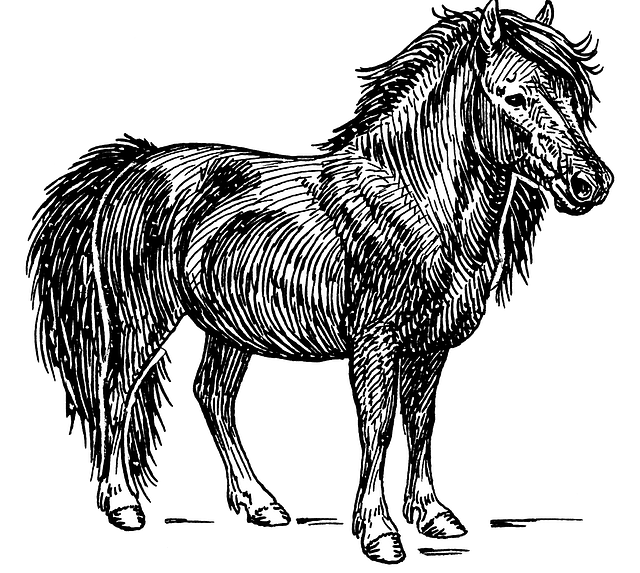
It’s also interesting in that the Scots had long had an alternative term for small equines, and that was shelt, or sheltie, applied sometimes to Shetlands and sometimes more generically. Today it is almost universally applied to Shetland ponies, but that was not always the case.
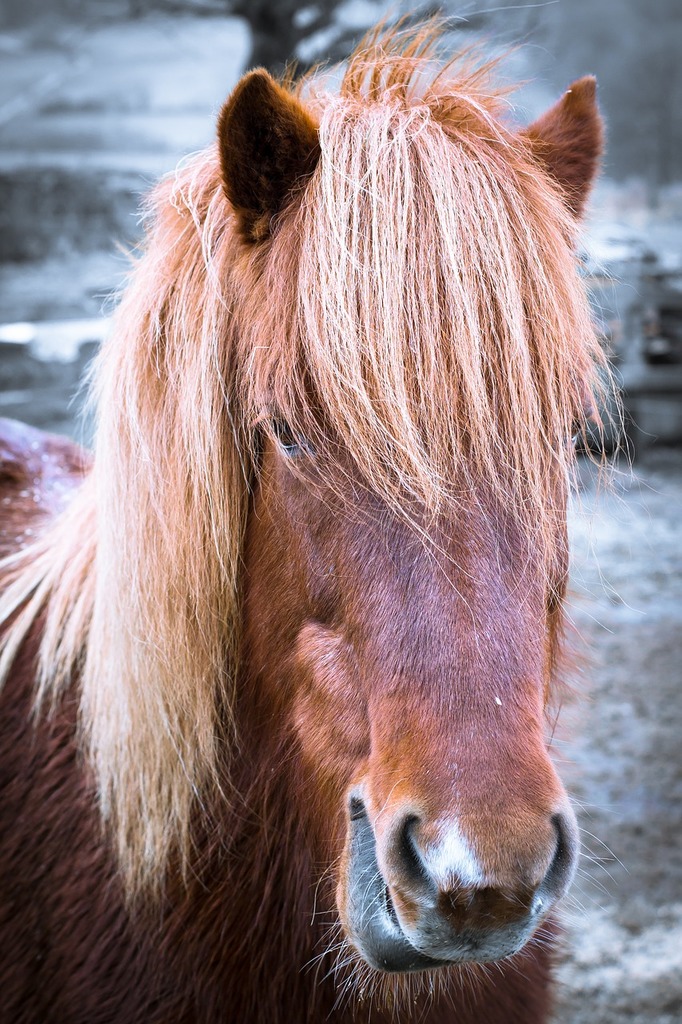
Pony is a term that can be used with pride and appreciation of the small equines who carried the world on their shoulders for centuries, before those oversized horses came along. It would be ironic if the name for smaller equines should derive from puisné, later born, since ponies are the originals, the elder, not the younger in the equine relationship. Large horses came after them.
It’s also interesting that the term pony first appears in documentary sources at a time when there was increasing interest in breeding larger horses, particularly for war, during the Commonwealth in Britain. If the term pony does derive ultimately from puisné, the French, of course, may have some justification in claiming the French language as the source and inspiration for pony. It’s also a little ironic, considering they are one of the countries that has adopted the term, as “poney”. Back to its roots, perhaps?
 historyonhorseback