Listen here to my History Rage rant about the importance of the Galloway Nag in Thoroughbred history. https://www.historyrage.com/episodes/episode/a1f661a1/breeding-out-thoroughbred-myths-with-dr-miriam-bibby

Listen here to my History Rage rant about the importance of the Galloway Nag in Thoroughbred history. https://www.historyrage.com/episodes/episode/a1f661a1/breeding-out-thoroughbred-myths-with-dr-miriam-bibby
Managing. It’s such a human thing, isn’t it? Do any other animals in the world use the concept quite the way we do? Ants and bees have organisation, and so do flocks and herds. But managing … it tends to bring to mind corporate management, business handbooks and structure, people jostling for a place on the career ladder, and more of the same.
The semi-feral horses (ponies if you prefer – I’m sure they don’t care one way or the other) that live in herds in Britain that I discussed in an earlier blog are managed, often by people whose families have been involved in the care and management of the herds for centuries. I want to take a look at what that really means. However, before I do that, please, if you can, watch this documentary. It’s from 1925 and it charts the transhumance of one tribal group, the Bakhtiari, as they travel with their animals to their main summer grazing area. It’s not easy to watch, and you may find your twenty-first century sensibilities severely tested. The film is called “Grass: a Nation’s Battle for Life”. The main part covering the journey of the Bakhtiari begins at around 20 minutes 44 seconds, and you may prefer to watch from there. Then, if you are so inclined, jot down your thoughts after watching the film.
https://archive.org/details/xd-13934-grass-feature-version-mos-vwr
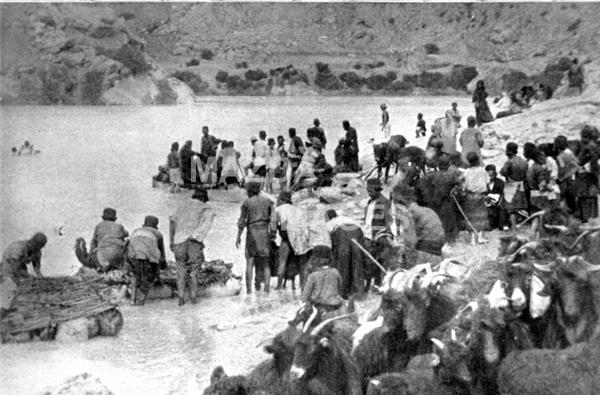
So here are my thoughts: This is one of the most gripping films I will ever watch. It’s terrifying and totally compelling in equal measure. Can’t bear it – can’t look away. People stripped half naked in freezing cold rivers trying desperately to steer their own way and their animals to safety. Carrying donkeys and calves on their backs. The animals are beasts of burden and so are the humans. Some of them are going to die and they know it. The sheer desperate need to make the journey. This is not so very far removed from the great migrations across Eurasia and Doggerland of hundreds of thousands of years ago. And this was happening just under a century ago. It’s not droving; it’s not herding, it’s not hunting, it’s a mass of animals and people on the move, all headed in the same direction – to the source of nourishment – grass. See how those sheep break into a happy run as they head downhill after the journey over the terrifying snowy mountain. They’re not running away – they could, but they know their best chance of survival is with the herds, and with the humans. Despite the anxiety, despite the rough handling, despite the fear and turmoil, they stick together. It’s epic. Even the names of the mountains are like something out of Lord of the Rings! And why are the humans doing this? Quite simply to get the herds and flocks to GRASS. Survival. Everyone’s survival, for all are interdependent.
When people talk about “the good shepherd” THIS is what they should have in mind. Not white Jesus in a clean robe, long hair neatly brushed and hands that never touched a carpenter’s tools. This is what they should visualise. Half naked people in freezing cold streams astride inflated goatskins, desperate to get their flocks and herds safely to the farther shore. These are the good shepherds. Managing.
So that’s “managing” the herds. A special, superhuman, interspecies type of management that makes our modern use of the term look laughably inadequate and even puerile. The people who manage the modern pony herds in Britain may or may not be the direct genetic descendants of the ancient herders (though some of them may be). The ponies may or may not be the direct genetic descendants of the equines who roamed across Doggerland half a million years ago (though some of them may be). They aren’t facing quite the same hazards as the ancient hominids of thousands of years ago, or even the Bakhtiari in the twentieth century. But they are still fulfilling a role with its roots deep in our human past.
More on the modern-day herds to follow.
Miriam A Bibby 01.12.23.
 historyonhorseback