I owe the shade of novelist Catherine Cookson an apology. When I was growing up in North East England, Cookson (1906-1998), a local writer from South Shields, was popular with what I considered to be the older generation. References to her were met with a certain amount of eye-rolling from anyone in their teens or twenties.
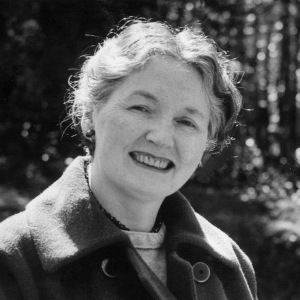
Catherine Cookson
We, the post-war generations, whether Teddy Boys and Girls, Mods, Rockers, Hippies, Punks, New Romantics, Goths, Ravers, Skins, Skas, Northern Soul aficionados or any combination of the aforementioned, and then some, simply didn’t read Cookson. We were all in our own ways rebels, and the past she described was inspiration for the rebellion. Cookson’s gritty tales of hardship belonged to the days of the Jarrow March and Manchester cotton mills. They were either misery memoirs or bodice rippers, stories of exploitative (and probably moustache-twirling) squires and downtrodden miners and laundrymaids. Our world was going to be different.
I realise I’m not speaking for all those generations here, or even completely for myself. I listened to enough stories from my own relatives of hardship during the Great Depression to know and appreciate wholeheartedly that it is part of my inheritance. I knew families where Cookson was read as avidly by the children (mostly daughters) as their parents (mostly mothers).
I suppose of all the post-war youth movements I most identified (somewhat vaguely) with hippies. This was really a diversion for a while, because at my core I identified (and still do) as a horse person. When I was growing up, someone with an interest in horses would have been viewed (incorrectly) as middle class. You can be a working-class horse person. I am a working-class horse person. I lived in a flat little better than a slum in Newcastle, then a council house; I went to a working-class comprehensive in a mining town, and attended a riding school where most of the kids were working class. Many of my friends who have kept horses are working class too, and many of the horses I first encountered were working horses on the streets of Newcastle or the pit ponies at the colliery where my uncle worked. One day I might tell you of the culture shock I experienced on my first (and only) encounter with the University of Nottingham Equestrian Society.
This is where Catherine Cookson comes in, and why I owe her an apology. Cookson was a prolific writer, with 104 published novels, the first of which came out in 1950. Her work was incredibly popular, with several books in the best-seller list at a time. They transferred well to television, too. When, very recently, I came across two of her books that focus on the horse-human relationship (“The Nipper” and “Joe and the Gladiator”) I read them out of curiosity. One of the great things about ageing is that you spend more time doing the things you really want to do and less time “Worrying What People Will Think And Am I Fitting In With My Peers”. I was brought up in that school and now I blow it a loud raspberry.
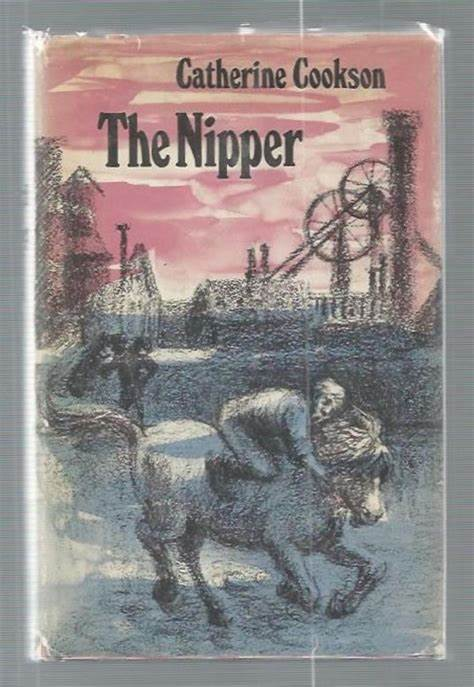
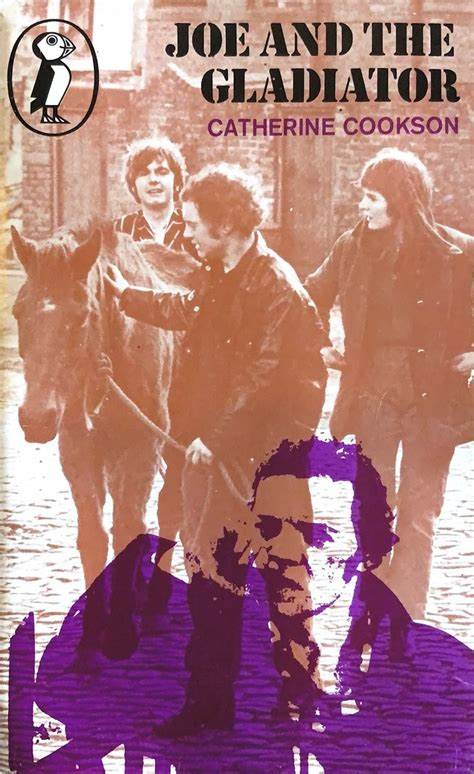
Let me say right away these are cracking books. They are well worth the brief amount of time it will take anyone to read them. On the basis of these two novels, both of which are aimed at what would now be called “the young adult” (YA) market, I appreciate Cookson’s ability to characterise, to structure a story, and most of all, her skill in creating the complex, ambivalent, frustrating, infuriating circumstances of poverty. “Joe and the Gladiator” is a simple story, about a young lad and the horse he takes on after the death of its elderly owner, a rag and bone man. “The Nipper” is the tale of a young lad and the galloway (gallowa) to whom he is so dedicated that when the pony is taken to work in the pit, he follows it to labour alongside it underground himself. Certainly, aspects of the plot are more than a little creaky, but Cookson handles it so deftly that when you hear it straining at the edges, you give her the benefit of the doubt and carry on reading.
Cookson always described her books as “readable social history of the North East interwoven into the lives of the people”, rather than romances. It’s a very reasonable self-assessment from a woman who started at the bottom of the stack and rose to be an extremely knowledgeable writer of historical fiction. The plausibility of her work is not simply informed by her own experiences, but also by extensive research. As it says in the introduction to “The Nipper”: “There is nothing sentimental about her writing; she is unrelenting in the strong images she invokes and the characters she portrays”.
You can keep your tales of prancy dancy fancy stallions with their L’Oreal manes blowing in the wind and their hyperinflated nostrils working overtime – give me a working-class horse tale any day of the week. These are two the best.
 historyonhorseback